High-speed forecast shows less profit for telcos
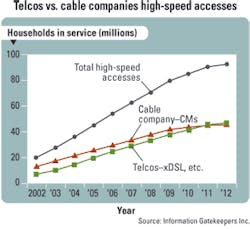
Information Gatekeepers Inc. (www.igigroup.com) has developed a new forecast that highlights the quandary facing the large telcos in the U.S. today. According to Paul Polishuk, PhD, president of IGI, telcos have been installing and placing in-service high-speed accesses �as fast as the market demanded them,� adding about 5 million new high-speed customers per year.
�We are now entering a period that the telcos will be limited by the resources available to cut over the new advanced, high-speed services such as FiOS and U-verse,� says Polishuk. �This will present a real test of will for the telcos� management as they watch their wireline revenues decline while they continue to pour billions of dollars into the advanced networks.�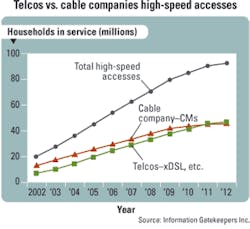
Chief analyst and forecaster Clif Holliday, the author of the firm�s Lightwave Series of reports, says that this issue is apparent at Verizon, whose cutover requirements are limiting the company�s high-speed gains to about 75% of previous achievements. Holliday says that although Verizon has announced that it is moving personnel to address this, but limitations remain. �Our revised forecast going on out to 2012 suggests that the telcos in total will only be adding about 1 million h-s lines per quarter due to this issue. As a result, the �catch-up� date for telcos to match the cable companies in h-s accesses is now much later,� he explains.
Polishuk believes that xDSL will be de-emphasized and telecom providers will concentrate on selling and installing new technologies. The slowing of replacement revenues for loss of regular telephone lines may have �far-reaching consequences� as carriers try to address the financial impact of less profit with newer high-speed technologies in the face of ongoing investment requirements.