Verizon leads FTTP deployments but won't pass 1 million homes
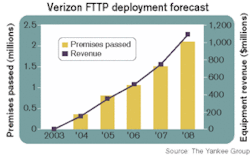
Analysts at the Yankee Group (Boston) believe that Verizon will pass more than 350,000 customer locations this year, significantly less than the one million locations the carrier previously announced. Nevertheless, this deployment will likely generate more than $150 million in broadband equipment revenue. Over the next five years, Verizon should pass almost six million homes, apartments, and businesses with fiber, generating equipment revenue of nearly $3 billion.
Last July, the three largest RBOCs announced they would use the ITU G.983 standard ATM-based broadband PON (BPON) for future fiber to the premises (FTTP) builds. Several factors are driving this initiative, including the pressure to generate new revenue from video services. Regulatory barriers may hold it back in the short term, however.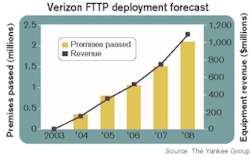
"Verizon recognizes the evolving communications landscape will force it to offer new services," reasons Matt Davis, director of broadband access technologies at the Yankee Group. "The real question is whether a massive fiber build is necessary to achieve this goal. Less radical options such as partnering with satellite providers and use of copper-based technology are still open. For the short term, regulatory posturing may drive the FTTP initiative. However, regardless of motivation, this initiative will take root in greenfield deployments and slowly work its way to strategic overbuild."
Manufacturers of optical-line-terminal equipment, optical-networking units or terminals, and set-top boxes are best positioned to take advantage of Verizon's enormous capital project, say analysts.
For more information about the report, "Verizon Leads the Fiber-to-the-Premise Initiatives," visit www.yankeegroup.com. ..