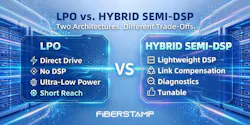
LPO vs Hybrid Semi-DSP: A Comprehensive Comparison for AI Computing Networks
As AI computing infrastructure continues to scale, optical interconnect architectures are evolving to address increasingly demanding requirements for power efficiency, link performance, interoperability, and network manageability.
Among the architectures gaining attention, Linear-Drive Pluggable Optics (LPO) and Hybrid Semi-DSP take fundamentally different approaches to signal processing and link optimization.
Rather than viewing them simply as competing technologies, it is more useful to understand how their respective architectures address different requirements across AI computing networks.
I. Understanding the Fundamental Architectures
LPO (Linear-Drive Pluggable Optics)
LPO uses a direct-drive architecture in which the transmitter laser is driven directly by the electrical driver, while the receiver uses a linear TIA. The DSP is completely eliminated from the optical module.
Signal equalization, compensation, and retiming are handled entirely by the high-performance SerDes within the switch ASIC. The primary objective is to minimize optical module power consumption and maximize energy efficiency.
Hybrid Semi-DSP
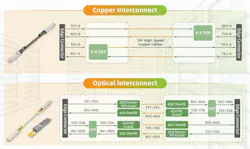
A Hybrid Semi-DSP solution integrates a lightweight, streamlined DSP into the optical module while retaining basic digital equalization, signal compensation, and configurable tuning capabilities on the Tx/Rx side.
Rather than implementing the complex long-distance dispersion and nonlinear compensation algorithms found in conventional full-DSP solutions, the Hybrid architecture seeks to balance power consumption, transmission performance, and controllability. It also enables open parameter tuning through the host system.
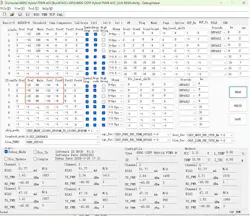
FIBERSTAMP’s Hybrid optical solutions are designed to combine the low-power advantages of LPO with the flexibility, link margin, diagnostics, and configurability associated with DSP-based optics.