Why the UK’s Fiber Installation Technology of the Future Is Already Here
Often suppliers and manufacturers across many sectors will talk about the importance of staying ahead of the market. When it comes to industries like internet infrastructure, there really is some weight to that, as major developments in the network mean engineers need access to the most efficient technology as soon as project requirements or demand changes.
With the impact of COVID-19 increasing the global need for connectivity, completing network installations and maintenance on time is essential for busy engineers who are in really high demand at the moment. They can’t afford to be losing out on valuable projects if the technology they are using to install and upgrade networks is causing delays.
The race for full fiber is intensifying this dynamic as many countries, especially those lagging behind, continue to accelerate FTTH rollouts. In the wake of the pandemic, many governments are now more focused on the importance of connectivity and are increasing funding, introducing frameworks, and removing red tape to allow for faster installation of full fiber networks to properties.
This is because the expectation of high-quality internet is now seen as an everyday necessity - especially with many people working or learning from home who need to rely on services to complete their day-to-day responsibilities. All of this has placed a real pressure on fast rollouts, and network engineers want to take advantage while there is a huge pipeline of work. You only need to look at the latest FTTH Council research to see the time pressure FTTH rollouts are forcing on engineers to understand why the right technology is now more important than ever.
According to the FTTH Council’s research, between 2019 and 2020, France led the way, increasing the number of homes with access to full fiber across the nation by 4.6 million. Italy, Germany, and the UK all made the top five too with 2.8 million, 2.7 million, and 1.7 million increases in homes with full fiber respectively. But when we look at a percentage breakdown, the UK and Germany lag way behind.
Latvia, Lithuania, and Spain all have FTTH coverage above 85%, while the likes of Sweden and Portugal also have above 80%. The UK and Germany are way down, with the UK still below 25% according to Ofcom’s most recent figures and Germany still below 20%. This is of course due to the fact that both nations have a vast copper infrastructure that needs upgrading and replacing. Other countries haven’t faced those sorts of complexities and challenges. Even so, countries like the UK can still look to them to learn from their rollouts – what technologies, strategies, and tactics they used and what could be improved upon – as their deployments continue to gather pace.
Take Sweden as an example. Engineers and network installers have adopted ribbon fiber technology, which can splice up to 16 fibers; it’s really fast and prep takes very little time. A single splice may only save minutes, but if you aggregate such savings across entire projects, or an entire nation’s rollout, the time and cost benefits really do add up.
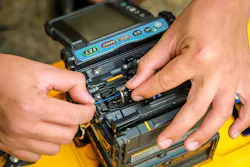
Germany is also a good place to look for inspiration. In many cases there have been electricians who have had to help plug the skills gap to install and upgrade networks in Germany who don’t have the right experience with fiber installation. They have had to rely instead on technology to support them. Fortunately, the right fusion splicing technology can automate large parts of the process for such installers; they only really have to worry about placing the fiber in the splicer and the rest is then done for them. The UK has similar challenges with its workforce, so technology will play a key role in plugging skills gaps to keep projects on track.
Ultimately, ensuring a fast-paced and ever-evolving sector like internet infrastructure has the required number of talented engineers is a real challenge. This is why the sector has to rely on its suppliers and manufacturers to continue to develop tools and equipment ahead of the curve that enable both skilled and unskilled installers to complete network installation and maintenance to their schedules. As the UK ramps up its FTTH rollout, this is going to be even more vital in the next two to five years.
Neil Bessant is fusion splicer divisional manager at Fujikura Europe.
About the Author
Neil Bessant
Fusion Splicer Divisional Manager, Fujikura Europe
Neil Bessant is fusion splicer divisional manager at Fujikura Europe.
Voices of the Industry