Artificial intelligence (AI) drives the next wave of fiber production and construction around the world. The latest benchmark of this growth emerged at the end of January, when Corning and Meta announced a multi-year, up to $6 billion agreement to accelerate U.S. data center construction to support Meta’s apps, technologies, and AI ambitions. It’s an announcement that Corning is expanding its manufacturing capabilities across North Carolina, increasing its employment in the state by 15-20% and sustaining a workforce of more than 5,000.
Meta is not the only cloud provider that has publicly announced investments into fiber over the last half of 2025. In September, Microsoft announced it would work with Corning to accelerate the production of hollow core fiber (HCF) in – where else? – North Carolina as part of a larger effort to build a HCF ecosystem as it rolls out the fiber to further connect its Azure data centers.
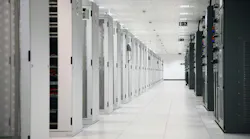
Consider Meta’s Hyperion $30 billion data center campus under construction in rural Louisiana. When completed, it will cover an area equivalent to most of the island of Manhattan, delivering 5GW of computing. This facility will have hundreds of thousands of miles of fiber within its walls to support high-density GPU AI clusters, and hundreds of thousands more miles linking it to other data centers and the rest of the world.
Without fiber, Louisiana wouldn’t have had a chance to bring such a project and all its jobs to the state.
New digital economy opportunities
Around the country, fiber and the AI data center boom are creating new opportunities for communities to participate in the modern digital economy, both as operators and users of the latest tools and technologies that are emerging every month, as everyone from corporate America to disruptive startup companies with innovative ideas.
Research from RVA LLC indicates that 2.3 times more fiber is needed in the U.S. to support AI performance, scalability, and security. This translates into 109 million new fiber miles on existing routes and 66 million new fiber miles for connections to new data centers. It is necessary to meet the growing demands of hyperscale data centers for AI applications, which are expected to see at least a 3x increase in capacity by 2029.
This surge in demand highlights the critical need for new investment, policy modernization, and smarter infrastructure planning to keep pace with AI innovation. Investments are needed to deploy new short interconnections within each new hyperscale data center, upgrades to existing long-haul interconnections to increase capacity, and entirely new long-haul interconnection routes to meet AI’s latency and bandwidth requirements.
AI and quantum technologies play key roles today and will play even greater roles in the future. The Fiber Broadband Association will explore this brave new world at Fiber Connect 2026 with The AI and Emerging Technology Infrastructure Summit on Wednesday, May 20, 2026. We’re bringing together leading AI innovators, quantum experts, and technology futurists to discuss how the unlimited capacity of fiber broadband unlocks new possibilities for innovation and discovery, illustrating how fiber and FBA play a significant role beyond fiber-to-the-home (FTTH) as the information economy becomes the AI-enabled economy.
The summit kicks off with the opening keynote by noted futurist and theoretical physicist Dr. Michio Kaku. Author of several New York Times bestselling books, his most recent, “Quantum Supremacy: How the Quantum Computer Revolution Will Change Everything,” explores how quantum computing may supercharge AI, solving some of humanity's most significant problems like global warming, world hunger, and previously incurable diseases. Following his keynote, Dr. Kaku will be joined by our presenting sponsor, IonQ, for a fireside chat to dive into the evolving infrastructure needs of AI, quantum, and our increasing capacity-and power-intensive world.
Following Kaku are several panels and discussions with companies and service providers that set standards and build the infrastructure to turn AI’s promise into reality, including executives from Oracle and NVIDIA. James Kelly, VP of Market Intelligence and Innovation for the Open Compute Project (OCP) Foundation, will lead a panel of OCP members to discuss the practical realities and future direction of revolutionizing data movement—from photonic integrated circuits (PICs) to scale-up AI pods, to scale-out AI factories and scale-across AI multi-data center clusters.
The panel will look at connectivity requirements of AI applications to the computing continuum from central cloud to edge to endpoint. Beyond emerging trends, this discussion aims to cover fiber-entwined technologies like breakthroughs in silicon photonics, the rise of linear and co-packaged optics (CPO), and advanced optical interconnects such as optical circuit switching (OCS), emphasizing their technical and market impacts on overcoming bottlenecks in data transfer for AI training and inference, as well as their role in enabling next-generation AI accelerators and memory hierarchies.
Like fiber, power is a critical resource supporting emerging applications and services, moving well beyond the early days of smart grid modernization. The first panel of the day, with experts from Centranet, Fidium Fiber, and Blue Stream Fiber, will discuss the who, what, when, and why fiber and power are intrinsically linked as essential parts of today’s middle mile and last mile service delivery and infrastructure, especially as larger demands for more power require increasingly higher levels of grid orchestration and continued modernization of current infrastructure.
Securing America’s AI future with fiber
The White House FY 2027 Research & Development budget priorities place AI and quantum science at the top of its September 23, 2025, executive memorandum. In this setting, fiber is not a utility, but a strategic national asset that will power AI and quantum computing and determine whether America leads or follows in the two most transformational technologies reshaping the world in the decade to come.
“Winning the AI Race: America’s AI Action Plan,” released by the White House in July 2025, stated the goal of ushering in a “new golden era of human flourishing, economic competitiveness, and national security for the American people” by promoting the rapid construction of data centers and semiconductor fabs, along with creating new national initiatives to increase high-demand occupations like electricians and HVAC technicians.
The next decade belongs to nations that have built the fundamental infrastructure for reliable, robust, and secure high-speed broadband that can support both today’s needs and tomorrow’s opportunities. Without fiber, there is no enhanced Smart Grid delivering the power needed for everything from AI data centers to next-generation robotics. Without fiber, there is no quantum networking to secure our central institutions in the looming post-quantum cryptographic era. And without fiber, no AI future unlocks unprecedented productivity across every sector of the economy.
Fiber is the only broadband technology with virtually unlimited capacity for today and tomorrow. Innovation is 100% technology-dependent, with fiber continually creating new opportunities due to its limitless potential. It’s no surprise that nations around the world are building 25G and 50G PON access networks today, because they understand that the future of their citizens shouldn’t be technology-neutral, but superior. Why should America settle for second best?
About the Author
 Gary Bolton