AFL tapped by Inligo as fiber partner for Australia’s Unite Cable System
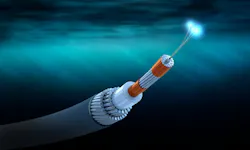
Inligo Networks, an independent private subsea cable owner and operator, has named AFL as the primary cable supplier for the Unite Cable System.
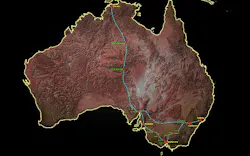
The Unite Cable System (UNITE) is a high-capacity, low-latency terrestrial network spanning six Australian states and territories. By partnering with AFL, Inligo will accelerate the deployment of a critical “digital highway” connecting international subsea cables, major data centers, and regional hubs.
UNITE is focused on providing an alternate, low-latency, high-capacity transmission service path between customers in Australia with connections into Southeast Asia and across the Indo-Pacific.
Specifically, UNITE will eventually provide an alternative, low-latency, high-capacity transmission service path between customers in Sydney, Canberra, Melbourne, Adelaide, and Darwin, with connections to South East Asia and the Indo-Pacific, all delivered on a unified optical platform across the terrestrial and subsea cable systems.
“AFL’s ability to deliver high-performance fiber in the correct form factor, at scale, ensures we can meet our aggressive deployment timelines and provide Australia with the advanced connectivity it desperately needs,” said Brian Evans, CEO of Inligo Networks.
Multi-stage network build
Inligo Networks is rolling out the Unite Cable System in multiple stages:
Stage 1: Beginning in 2024, Stage 1 connected Darwin to Adelaide and Stage 1A – Adelaide to Melbourne (and Ballarat to Geelong, Geelong to Melbourne).
Stage 2: In 2025, connections began in Adelaide to Sydney and Canberra.
Stage 2A: Connections from Ballarat and Geelong to Bendigo/Shepparton/Wodonga/Albury/Wagga Wagga are scheduled to begin in 2027.
A staged deployment
The Unite Cable System is currently rolling out in stages, linking Darwin, Adelaide, Melbourne, Sydney, and Canberra, as well as vital regional centers.
Upon completion, it will serve as a primary artery for carriers, enterprises, international subsea network owners and the regional communities currently underserved by existing infrastructure.
The network will support at least 40×400 Gbps wavelengths per fiber pair.
Interconnecting domestic networks
In addition to the Australia (UNITE) cable system, Inligo is building a domestic US West Coast (USWEST) network connecting Los Angeles, San Jose, San Francisco, Portland, and Seattle. Inligo is also deploying network infrastructure in Singapore, Indonesia and East Timor.
Inligo has incorporated a unique network that allows customization.
The domestic network designs incorporate WSS (Wavelength Selective Switch) ROADM technologies to deliver wavelength services between Points of Presence (POPs) on the domestic networks in the country, rather than handing off services at our international landing points, providing a seamless connection experience across all locations on its network.
Because WSS technologies are modular, they can be customized to the individual wavelength and provide highly tuned wavelength selection, switching, power monitoring, and auto-power balancing all within a single device.
For related articles, visit the Optical Technology Topic Center.
For more information on high-speed transmission systems and suppliers, visit the Lightwave Buyer’s Guide.
To stay abreast of fiber network deployments, subscribe to Lightwave’s Service Providers and Datacom/Data Center newsletters.
About the Author
 Sean Buckley
Sean Buckley
Sean is the Editor-in-Chief of Lightwave. He establishes and executes Lightwave's editorial strategy across its website, email newsletters, events, and other information products. Before coming to Lightwave in July 2023, he served as editor of Broadband Communities. Earlier, he served as senior editor of FierceTelecom and the editor of the former Telecommunications Magazine. He got his start in the optical industry in 1998 when he became the editor of enterprise and optical networks at Information Gatekeepers. He has a BA in English from the University of Massachusetts, Boston, and lives in Dracut, Mass, with his wife, two sons, and his cat, Dove.