Communities take creative steps to enable broadband
While broadband buildouts have proliferated as Tier 1 telcos and cable operators expand fiber and hybrid fiber-coaxial (HFC) networks, many communities still have little or no choice in service.
Some communities have been proactive in building their own network infrastructure, entering a public-private partnership with a service provider, or building their own open-access network that allows multiple providers to offer service in the community.
Besides offering consumers service, communities are leveraging their broadband networks to support critical services like water, sewer and trash pickup to name a few.
Lightwave has been tracking various community broadband models:
· Public/Private partnerships: A Public-Private Partnership (PPP) in broadband is a collaboration between a government entity (a city, county, or state) and a private ISP to build, own, or operate high-speed internet networks. As a symbiotic relationship, the ISP and community each have their own roles to play in a PPP. The broadband provider will design, build, own, and operate the broadband network. In exchange, the local or state government will offer the ISP streamlined permitting, expedited rights-of-way, and provide tax incentives.
Allo, Astound and Surf Internet are among a growing group of broadband providers that have entered into public-private agreements with communities, including Lincoln, Nebraska; Clallam County, Washington; and Troy Grove Village, Illinois. Leveraging a mix of public and private funding, these networks. While the communities and their relationships with private providers vary, the common thread is that these providers are bringing broadband to areas where broadband service options were either limited or nonexistent.
· Municipal Broadband: While municipal broadband has seen its share of challenges over the years, it is not stopping some communities, particularly those that have their own electric utility, from finding creative solutions to light their communities up with broadband.
Communities like Elberton, Georgia; Wyandotte, Michigan; and Fort Collins, Colorado, that operate electric utilities, are taking matters into their own hands. Already providing electricity and other services like water and sewer, they are adding broadband to their offerings for consumers and businesses. One advantage a municipal utility has is twofold: they have an established team that knows how to install wiring and can provide easier access to rights-of-way, easing the make-ready process for installing fiber on poles.
However, not every municipality wants to operate its own broadband network. Others don’t want to be in the broadband business but are building the necessary infrastructure so others can rent their facilities and offer services. In Merrimac, Mass., the Merrimac Municipal Light Department has partnered with Ripple Fiber to serve 3,000 homes with fiber-based internet service.
· Open access models: Initially developed in European and Asian countries, the open access broadband network concept has been gaining momentum in the U.S. thanks to pioneering efforts such as UTOPIA and AT&T’s Gigapower initiative. Open-access broadband is a network model in which a single entity owns the physical infrastructure (such as fiber-optic cables) and leases it to multiple competing ISPs. Superior, Wisconsin, while not interested in being a service provider itself, moved to establish its own open-access network due to a lack of engagement from traditional service providers to solve its broadband problem, leaving the community with few options besides slow-speed DSL services.
· Smart Cities: Leveraging IoT devices, AI, and data analytics, a smart city aims to improve efficiency, sustainability, and citizen welfare. A city’s IoT devices will collect data from citizens, devices, buildings, and cameras. Smart city applications include a wide array of functions, including traffic and transportation systems, power plants, utilities, urban forestry, water supply networks, waste disposal, criminal investigations, information systems, schools, libraries, hospitals, and other community services.
Communities like Tucker, Georgia, are working with Comcast Smart Solutions to upgrade the lighting infrastructure of the city’s public trail and park system with a solution designed to enhance visibility and connectivity. Meanwhile, Chesapeake, Virginia, tapped Boldyn Networks to build a wireless network not only to enable third-party providers to offer services to its community but also to support its own city infrastructure, such as trash collection and water plant operations. Chesapeake also built a fiber network comprising 175 miles of fiber and 160 miles of conduit. Chesapeake can lease excess fiber capacity to local broadband providers that can serve residents and businesses.
This special report, which will be updated throughout the year as we track more providers, contains articles that have appeared on Lightwave’s website over the past year.
Look at this growing community of new broadband stories:
Chapter 2: Astound Broadband brings broadband to life in Washington’s rural Clallam County
Chapter 3: Chesapeake, Virginia’s hybrid smart city network, enables creative problem-solving
Chapter 5: Fort Collins Connexion's Josh Hales on making fiber services relevant and competitive
Chapter 7: Surf breathes fiber broadband life into Troy Grove Village, Illinois
Chapter 8: Comcast Smart Solutions equips Tucker, Georgia’s trail system, with real-time analytics
Chapter 9: Wyandotte, Michigan’s WMS finds orchestration balance across legacy and next-generation devices
Whether you are a small provider or a community looking to enhance your broadband situation, you will find interesting insights about how some communities are taking their broadband matters into their own hands.
If you have a community with a broadband story, feel free to reach out to Sean Buckley, Editor in Chief of Lightwave at [email protected].
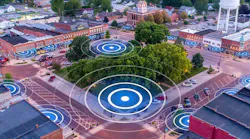
ALLO Fiber's network build in Lincoln, Nebraska emphasizes a community-focused approach, building out entire neighborhoods with fiber rather than cherry-picking locations.

Astound will deliver speeds of up to 5 Gbps to over 1,500 homes in Clallam County, Washington, leveraging a mix of private and public broadband funding sources.

The City of Chesapeake, Virginia, has taken another step toward enhancing connectivity options for public services, such as water, by tapping Boldyn to deploy a city-owned private wireless network.
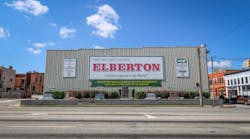
Elberton, which serves as the city's utility, is upgrading from hybrid fiber-coaxial networks to a full fiber system to meet future broadband demand.

In this Broadband Pulse podcast, we talked with Josh Hales, Senior Manager of Broadband Sales at Fort Collins Connexion, who said the effect is clear: incumbent cable and telcos are now responding with new broadband options.

ConnectSuperior, the city’s broadband initiative, aims to provide every home and business in the area with access to affordable broadband internet.
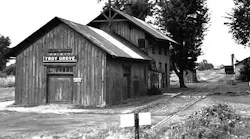
Troy Grove, Illinois, transitioned from limited wireless options to a new fiber broadband network serving 145 addresses.
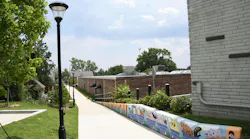
Comcast Smart Solutions is collaborating with the City of Tucker, GA, a suburb of Atlanta, to upgrade the lighting infrastructure of the city’s public trail and park system with a solution designed to enhance visibility and connectivity.