PLP'S FIBERLIGN CLAS storage system accepts a range of cable sizes
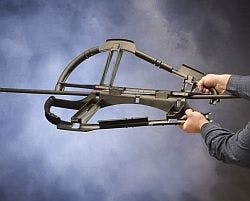
SEPTEMBER 28, 2009 -- Preformed Line Products (PLP) has designed the FIBERLIGN Center-Lock Aerial Slack (CLAS) storage bracket specifically for in-span cable storage. The "Center-Lock Hinge" (patent pending) allows the bracket halves to swing open, rest
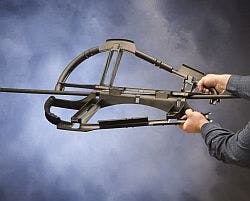
onto the main cable, and close into storage position (butterfly motion), which the company says eliminates excess attachment components and metal fasteners. Heavy-duty UV-resistant cable straps simplify attachment to the main cable, and simultaneously lock the bracket while securing slack cable. Consequently, preparation time to build the center connection is eliminated, installation time is reduced, and no tools are required, according to PLP. The bracket provides in-span storage for ADSS cables up to 1 in. (25 mm) in diameter. Expansion tabs allow 20-in. (508-mm) maximum loop diameter storage and multicable storage for butt splice applications. The CLAS bracket halves can be separated at the center-lock hinge for efficient storage. Kits can be configured to include economical abrasion protection for ADSS cable passing the pole or a Uni-Group Cable Guide (UCG) to guide cable within a confined, low-profile pole space between communication and power lines. Made from all dielectric materials, PLP says the FIBERLIGN CLAS Storage System is safe and offers a high system life.Visit Preformed Line Products