Passavé unveils first programmable DBA engine
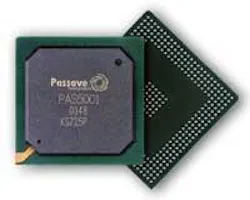
All PON architectures can benefit from a dynamic bandwidth allocation (DBA) engine. A PON is based on shared architecture; bandwidth is split between as many as 32 separate users. The DBA engine enables the service provider to adjust the bandwidth going to any one user by reallocating unused bandwidth. It also helps to enforce quality of service rules. Santa Clara, CA-based Passavé claims it has broken new ground with the development of “the industry’s first truly programmable DBA engine” for Ethernet PONs (EPONs). “This is more than a product,” contends marketing vice president Dror Sal’ee. “It’s a concept.”
What is required, says Sal’ee, is a DBA engine that takes into account a customer’s service-level agreement, the specific application, and the amount of bandwidth the customer has requested. And it must have some knowledge of history-of how much bandwidth has been received by each customer in the last few microseconds, all of which “requires very complex algorithms,” says Sal’ee.
Compounding the problem is that service providers do not have a firm grasp on customer usage models. When you give people a new technology, they invent new applications, Sal’ee notes. The Internet was developed as a mechanism for sending email, for example, but surfing the Internet became the killer application. “Give people a gigabit link all the way to the carrier, and you can’t imagine the applications they’ll come up with,” he reasons. “That’s a huge amount of bandwidth.”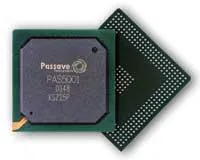
So what happens when the applications change? In the past, DBA engines could be built using a general-purpose CPU or as a hardwired implementation, but both of these methods are inadequate for use in today’s ever-changing networks, says Sal’ee. The general-purpose CPU can only make trivial decisions, and while a hardwired implementation provides the necessary high performance, it is inflexible. It cannot be changed. When traffic models change, the DBA algorithm becomes inefficient.
“There is no one right DBA algorithm; there is not just one good solution,” admits Sal’ee. “Different types of traffic scenarios require different algorithms.” The ideal DBA engine would adapt to changing traffic patterns and applications, thereby eliminating the need for forklift network upgrades.
What Passavé has developed is a programmable DBA engine that is akin to a digital signal processor. It is a specific dedicated ARM9 CPU core that can calculate and process packets at gigabit-per-second rates with the computational power of a 2.5-GHz Pentium processor.
The patented standalone DBA engine is embedded into the company’s existing PAS5001, a chip designed for use in an EPON optical line terminal. The device integrates Ethernet media access control functionality with full management capability through the IEEE 802.3ah operations, administration, and management (OAM) protocol.
Passavé’s DBA engine is offered with complete development tools to enable carriers to devise their own algorithms. The company has developed two algorithms, including the recently released Plato DBA algorithm, which enables the delivery of triple-play services while supporting legacy TDM traffic emulation over advanced Gigabit Ethernet PON systems. “It features high utilization and supports the transition from TDM traffic to data traffic,” explains Sal’ee.
According to Michael Render, principal analyst at Render, Vanderslice & Associates (RVA-Tulsa, OK), Passavé’s DBA engine and advanced algorithms are representative of a larger industry trend toward fiber to the home and premises solutions that provide greater bandwidth. “The objective is to deliver as much bandwidth as possible to every customer,” he says, “using higher-level PONs-EPONs, GPONs-and even point-to-point.”
Passavé’s DBA engine is already shipping in the thousands, reports Sal’ee, and carriers have already deployed it in the field. The programmability of the device enables carriers to adapt to changing usage patterns and customer applications, giving them greater control over both their networks and the investment they’ve made in those networks. “The key is the programmability,” says Sal’ee. “It’s all under the carrier’s control.”