Premier Products
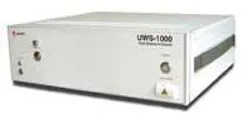
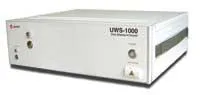
The UWS-1000 1.2-2-µm ultra-broadband light source emits what is known as “supercontinuum” light and has an ultra-wide output spectrum of 1200-2000 nm. The output has similar properties to laser light for easy focusing, a uniform spectral output, and a high optical power density (>-30 dBm/nm). The light source uses three key technologies: a new type of pulsed laser called a quasi-mode synchronous fiber-laser, which provides stable, short optical pulses even at high output powers; a technology that generates an ultra-broad spectrum by passing an optical pulse through a special nonlinear fiber; and a specially developed “balanced filter” feedback loop to continuously monitor output and ensure long-term stability (<±0.1 dB) of the light emission. For fiber-optic component characterization, optical coherence tomography, spectroscopy, interferometry, and remote sensing, the light source measures 443×132×400 mm and has a coherence length of <4 µm.
Santec, Komaki, Japan, www.santec.com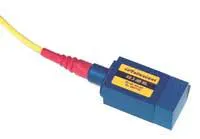
The RLCA return loss calibration artifact enables verification of high return loss measurements made on passive optical components. An important tool in the quality control process of passives for FTTX equipment, it can also be used to verify the performance of return loss meters at the limit of their measurement range. The return loss artifact is compact and comes with a calibration certificate.
Taliescent, Tucson, AZ, www.taliescent.com
The Link Qualification Test Boxes simulate worst-case link specifications and test to 1-Gbit/sec IEEE 802.3 and 10-Gbit/sec IEEE 802.3ae. All the fiber link bandwidths, dispersion, and losses are tailored to allow qualification testing of any 802.3-compliant transceiver. Attenuation can be adjusted to compensate for varying connector losses to the devices under test. Qualification boxes are customized to user needs.
Delaire USA, Manasquan, NJ, www.delaireusa.com
SYSTEMS
The Storage Extender is a set of configuration options that uses a fully modular architecture and “open port” concept to allow up to 24 high-capacity storage and/or Ethernet signals to be aggregated onto single or multiple 2.5-Gbit/sec SONET/SDH-framed uplinks using standards-compliant generic framing procedure and virtual concatenation technologies. Up to 6 × 2.5-Gbit/sec SONET/SDH channels can be packed onto a single fiber pair using integrated pluggable C/DWDM optical interfaces, making the extender equally suited as a “partner platform” in MSPP/MSTP metro core applications or direct data-center interconnection over dark fiber networks in point-point or ring configurations. The open port concept offers full client port flexibility from a single card type, with different services configurable on a per-port basis. The platform’s futureproof architecture allows new traffic aggregation modules to be introduced as customer requirements evolve-with 10-Gigabit Ethernet and Fibre Channel planned.
Transmode Systems, www.transmode.com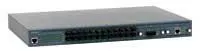
Consisting of an Ethernet concentrator and access node (customer premises equipment), the active Ethernet FTTX system offers a point-to-point last mile strategy, providing flexibility for service providers of Ethernet-based fiber to the subscriber solutions. The FNT 3824 concentrator is a 1-RU form factor that supports 24 subscriber ports. Each port can support 100 Mbits/sec of symmetric bandwidth. The two modular uplink ports can be configured as 100/1000Base-TX, 1000Base-SX, or 1000Base-LX ports. The concentrator features IGMP multicast control, spanning tree protocol, multiple quality of service levels, port trunking and mirroring, and bandwidth control. System dynamic range is 16 dB. The compact FNT 3011 access node-desktop or wall-mounted-includes integrated fiber management, SC optical interconnect, and a 10/100 Ethernet port for end-user connectivity.
AFL Telecommunications, www.afltele.com, Spartanburg, SC
INSTALLATION
OptiSheath Advantage terminals are optimized for optical access architectures, providing sealed environmental protection and quick and easy incremental connection of subscribers’ drop cable. Using OptiFit Advantage drop cable assemblies, the design of the terminals enables additional subscribers to be connected without reentering the terminal, allowing the subscriber connection to be made in half the time. The SCA-6T24 aerial connector terminal, an additional version for the aerial or above-grade fiber access network, installs easily on a strand or inside a pedestal, supports up to eight OptiFit drop cable assemblies from the bottom of the terminal, and includes aerial hanging brackets and quick-release clamps for closure reentry. The UCA4 and UCA5 sealed below-grade connector terminal, specifically designed for the pedestal or buried fiber access network, supports up to 16 OptiFit assemblies. The reenterable terminal features a blank adapter available for direct splicing into the terminal.
Corning Cable Systems, www.corning.com/cablesystems, Hickory, NC
COMPONENTS
Originally developed as a compact, flame-retardant cable that meets stringent OFNP (plenum)-rated requirements for data-center installations, VersaLite combines its indoor cable properties with rugged jacketing materials for outdoor installations. The cable uses a “dry” water-blocking system that includes an absorbent polymer filling throughout the length of the inner tubes to halt any moisture migration. Its added UV-resistant jacketing prevents additional sunlight degradation for diverse outdoor environments. This dry-blocking, loose tube cable is easier and cleaner to handle during installation compared to gel-filled cable. In applications involving high-speed, high-bandwidth 10-Gbit/sec backbones, VersaLite cable can eliminate splice-point insertion loss, potentially resulting in 1.5 dB of improved attenuation per cable run.
Mohawk, www.mohawk-bdc.com, Leominster, MA