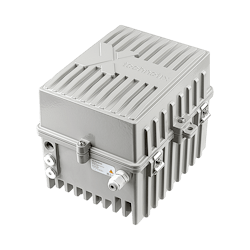

The Technetix rOLT (remote optical line terminal) provides easy configuration for mixed percentage penetration of GPON, XGS-PON, or 25G-PON to provide further flexibility and optionality than combo-PON systems. The rOLT is a cost-effective option for rapidly deploying fiber-to-the-premises (FTTP) high-speed broadband and multi-play services to rural locations. Where optical budget limitations can be a preventative factor in stretching connectivity from central office (CO) infrastructure to reach remote communities, rOLT reduces both time-to-market and build-to-bill cycles by traversing gaps in service caused by physical infrastructure. The Technetix rOLT is an ideal solution for all mounting scenarios, including underground pits, chambers, pole mount on the strand, discrete, mounted on poles, building facades, or MDUs (multi-dwelling units).
JUDGE’S COMMENT: “This is a great idea. It can eliminate a cabinet in some situations.”
About the Author
Lightwave Staff
Through our integrated media portfolio, Lightwave’s editorial staff delivers content focused on broadband, fiber optics and optoelectronics, the technologies that enable the growth, integration and improved performance of voice, data and video communications networks and services. Our experienced editorial team provides trusted technology, application and market insights to corporate executives, department heads, project managers, network engineers and technical managers at equipment suppliers, service providers and major end-user organizations.