QuiX Quantum raises $17M to create a universal photonic quantum computer
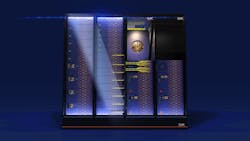
- QuiX Quantum, a Dutch photonic quantum computing provider, has secured over $17 million in Series A funding.
- The funding will enable the company to deliver a single-photon-based universal quantum computer in 2026.
- The company has established itself as a key supplier of quantum processors in Europe.
QuiX Quantum, a Dutch photonic quantum computing provider, has secured over $17 million in Series A funding to deliver a single-photon-based universal quantum computer in 2026.
Co-led by Invest-NL and EIC Fund, existing investors PhotonVentures, Oost NL, and FORWARD.one also participated. The Series A was preceded by an award from the European Innovation Council (EIC) Accelerator program, a key initiative of the European Commission that supports companies creating and disrupting markets with new technologies, such as quantum.
Since its founding in 2019, QuiX Quantum has established itself as a leading supplier of quantum processors in Europe.
In 2022, it started selling both 8-qubit and 64-qubit photonic quantum computers to the German Aerospace Center (DLR QCI). Later in 2024, QuiX Quantum began offering cloud access to its quantum systems, creating a platform for hybrid computing and bringing near-term quantum computing to various applications in industries such as infrastructure, defense, healthcare, and IT.
By securing this funding, the company stated that it would be able to offer a first-generation universal photonic quantum computer, designed to implement a universal gate set that enables any quantum operation. The company stated that it will also introduce universality, accelerating QuiX Quantum toward delivering large-scale, fault-tolerant quantum computers.
QuiX Quantum addresses the growing demand from data centers and end-users for greater computational power and access to real quantum hardware for testing algorithms and use cases. The financing round also strengthens the European supply chain, reinforcing QuiX Quantum’s position in Europe’s quantum photonic ecosystem.
QuiX Quantum’s universal photonic quantum computer leverages the principles of superposition, entanglement, and interference to process information in fundamentally different ways from classical computers. Built on silicon-nitride chips designed for high-volume manufacturing, its systems are scalable, operate primarily at room temperature, and are fully compatible with data-center environments. The company claims these advancements promise to unlock unprecedented computational capabilities in areas such as catalyst simulations, molecular dynamics, machine learning, and data analysis.
“Our Series A funding round fuels our mission to further develop the core building blocks required for a fault-tolerant universal quantum computer,” said Dr. –Ing. Stefan Hengesbach, CEO of QuiX Quantum. “With our first-generation system in 2026, we will demonstrate universality by overcoming long-standing challenges in fast feed-forward electronics and single-photon sources.”
But this is just the first step in the company’s quantum development.
Hengesbach said, “The next-generation system, planned for 2027, will focus on implementing error correction, a crucial step toward fault-tolerant systems capable of transforming industries such as chemical engineering, drug development, fraud detection, and advanced manufacturing.”
For related articles, visit the Business Topic Center.
For more information on high-speed transmission systems and suppliers, visit the Lightwave Buyer’s Guide.
To stay abreast of fiber network deployments, subscribe to Lightwave’s Service Providers and Datacom/Data Center newsletters.
About the Author
 Sean Buckley
Sean is the Editor-in-Chief of Lightwave. He establishes and executes Lightwave's editorial strategy across its website, email newsletters, events, and other information products. Before coming to Lightwave in July 2023, he served as editor of Broadband Communities. Earlier, he served as senior editor of FierceTelecom and the editor of the former Telecommunications Magazine. He got his start in the optical industry in 1998 when he became the editor of enterprise and optical networks at Information Gatekeepers. He has a BA in English from the University of Massachusetts, Boston, and lives in Dracut, Mass, with his wife, two sons, and his cat, Dove.