AT&T enhances wireless coverage along NYC MTA subway line via Boldyn partnership
Key Highlights
- AT&T has expanded 5G service on NYC subway lines including the 4/5 and G lines, covering key underground segments.
- The partnership with Boldyn enables a neutral host network that supports all licensed wireless carriers in the transit system.
- Enhanced cellular coverage aims to improve connectivity and rider experience in NYC's largest transit system.
- Boldyn's network infrastructure is fully built to support multiple carriers, facilitating future expansions.
- This initiative underscores NYC's commitment to modernizing transit infrastructure with reliable wireless connectivity.
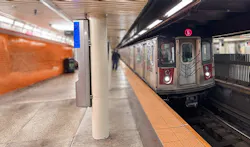
AT&T is giving its customers who work and reside in New York City a better wireless experience when riding through Metropolitan Transportation Authority’s (MTA’s) tunnel system by leveraging a new neutral host wireless system developed by Boldyn.
Through its partnership with Boldyn, AT&T has extended wireless service on MTA's four and five lines between Bowling Green and Fulton Street stations, and on the Crosstown G line between Bedford-Nostrand Avenues and Hoyt-Schermerhorn Streets stations.
This latest launch follows the recent debut of AT&T service in the Joralemon Street tunnel and segments of the Crosstown G line.

The Joralemon Street tunnel is the oldest underwater subway tunnel in New York City, and its 1.1-mile stretch connects the 4 and 5 lines between Manhattan and Brooklyn. In addition, the crosstown G runs through some of the most popular and vibrant places in Brooklyn and Queens, providing a critical connection to Manhattan-bound trains.
With these activations combined, AT&T riders can get enhanced cellular coverage on the 4/5 lines between Borough Hall and Fulton Street stations, and on the G line between Court Square and Hoyt-Schermerhorn Streets stations.
“Working closely with Boldyn Networks, we’re expanding reliable 5G connectivity underground and improving the rider experience in the nation’s largest transit system,” said John Emra, president, Northeast, AT&T.
Boldyn’s agreement with AT&T, the first wireless operator to go public about its presence on the neutral host’s network, underscores the need for MTA to extend wireless coverage in the system’s tunnels.
Ken Ranger, SVP of transit operations at Boldyn, said having wireless coverage in the NYC tunnels will provide travelers with the peace of mind that they can still use their phones to communicate with others.
“The vast majority of people have phones in their hands,” he said. “It reduces the anxiety of being unconnected, and people can know they are going to get to their destination and get in touch with who they are going to see.”
Neutral host advantages
As a neutral wireless network system, Boldyn's system will enable all the largest wireless operators to leverage it to enhance coverage.
And while AT&T is the first wireless operator on the system, it won’t be the last.
However, Boldyn did not indicate when other carriers will announce their presence on the new system.
“Throughout the network, anything we go into in New York City is fully built for all licensed carriers, in below-ground stations,” Ranger said. “Happily, for us, AT&T is the first to announce, and they have gone on all the G line, the Joralemon Street tunnel, and the 4/5 lines, but it’s built for all of the wireless carriers.”

Neutral wireless hosts like Boldyn are third-party providers that build, own, and operate shared cellular or Wi-Fi infrastructure (such as DAS or small cells) in a venue, leasing access to multiple mobile network operators (MNOs).
This model means that each wireless operator does not need to install separate equipment, reducing costs and energy consumption while enhancing in-building and outdoor coverage.
“One of the advantages of this neutral host or independent infrastructure we put down there is that it is put down once for all carriers,” Ranger said. “It is being built for everyone, so as technology changes, that work can be done on the outside data centers, whereas the physical infrastructure is once and done in the tunnels.”
Decade-long journey
Boldyn’s work with AT&T may be the latest headline, but its work to enhance wireless service in New York City has been a 10-plus-year journey.
The neutral host provider has a well-established relationship with the MTA in New York.
Between 2012 and 2017, Boldyn and its predecessor companies rolled out wireless coverage to all New York City underground stations without coverage.
Ranger said earlier this decade that it began talking to the MTA about how to provide wireless coverage in the tunnels.
“Beginning in the early 2020s, we began discussing in earnest with MTA about extending coverage in the tunnels,” he said. “There was a lot of back and forth on the technical nature and contractual nature, where we arrived at an agreement towards the end of 2022.”
Since 2022, Boldyn has been rolling out service, beginning with the Times Square to Grand Central shuttle line.
Ranger said that the latest announcement illustrates “how we’re extending service across the G Line from Hoyt-Schermerhorn to Port Square and then slowly extending out from the Joralemon tube through Bolling Green, Wall Street, and further up the 4/5 line, and progress continues.”

Navigating train tunnel challenges
While installing equipment inside existing train stations may pose some challenges for Boldyn, entering the city’s underground tunnels brings a different set of issues.
The first issue for Boldyn, or any neutral carrier working inside the train tunnels, is where to locate the necessary wireless radios and fiber-optic cable.
“Within the tunnels, it starts with where to find space to house the equipment because we need to put in an antenna, and our system gets to your cell phone through the train window height,” Ranger said. “Some of the tunnels are hundreds of years old and contain a lot of other equipment, so we had to find space, get permission to put in the equipment.”
He added that coordination on space and permissions “comes before you get into the design from a civil, technical, mechanical, and RF—really space and logistics is where it starts from.”

Wide spectrum support
For this deployment, Boldyn is installing radio equipment that will support all licensed wireless spectrum bands.
Cellular and Wi-Fi connectivity are also available in all subway stations.
Roughly, the system will support between 600 MHz and 4 GHz of spectrum capacity.
Ranger said the focus is on installing a future-proofed system.
“To put that much capacity down in the tunnels, you need a lot of equipment,” Ranger said. “We want to do this once.”
Boldyn had to install a telecom point of presence roughly every 700 feet, which required running fiber cabling and getting power to the radio electronics.
From there, it installed an inch-and-a-quarter cable at window height, extending in both directions from the electronics.
“Doing all these 700 feet at a time requires a lot of space, equipment, and a lot of installation work,” Ranger said.
All about coordination
As a provider of neutral wireless systems in New York City and other large cities such as San Francisco, Hong Kong, and London, Boldyn encounters similar issues.
However, Ranger noted that some cities, like New York City, come with specific nuances.
“In all the large city deployments we have done, it’s all very similar, but the devil is always in the details,” he said. “What’s unique about New York City’s subway system is that it runs 24/7.”
For Boldyn, it needs to perform its duties when trains are not running, which requires strong coordination with the MTA.
MTA was able to organize with Boldyn when it had to conduct work when a line was not in service. During these periods, MTA would conduct many work activities at once.
“In essence, we’re a piggybacker working around other work underway, whether that’s a new elevator or a rail line signaling upgrade,” Ranger said. “We have to worry about our own logistics, but also working around other groups doing work at the same time, and do it all safely.”
He added to ensure systems like subway wireless are completed within a limited time, “it’s all about how to pace the work and the cadence for a system that’s usable for a customer.”
For related articles, visit the Business Topic Center.
For more information on high-speed transmission systems and suppliers, visit the Lightwave Buyer’s Guide.
To stay abreast of fiber network deployments, subscribe to Lightwave’s Service Providers and Datacom/Data Center newsletters.
About the Author
 Sean Buckley
Sean Buckley
Sean is the Editor-in-Chief of Lightwave. He establishes and executes Lightwave's editorial strategy across its website, email newsletters, events, and other information products. Before coming to Lightwave in July 2023, he served as editor of Broadband Communities. Earlier, he served as senior editor of FierceTelecom and the editor of the former Telecommunications Magazine. He got his start in the optical industry in 1998 when he became the editor of enterprise and optical networks at Information Gatekeepers. He has a BA in English from the University of Massachusetts, Boston, and lives in Dracut, Mass, with his wife, two sons, and his cat, Dove.