AI drives data center power investment surge, says International Energy Agency
Key Highlights
- Electricity demand from data centers is projected to double by 2030, with AI-focused applications tripling their power use, outpacing global growth rates.
- Supply chain issues, regulatory delays, and community protests are key challenges hindering the expansion of data centers and their energy infrastructure.
- Emerging energy solutions such as grid-interactive assets and onsite gas power are being explored to meet increasing energy demands efficiently and sustainably.
- Collaboration between policymakers, tech companies, and energy providers is crucial to modernize energy systems and address bottlenecks associated with AI growth.
- The potential for onsite natural gas power to support data centers exists but faces supply constraints and high infrastructure costs, requiring careful planning.

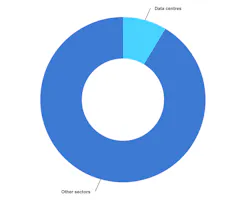
As more people use AI and energy-intensive applications, a new International Energy Agency (IEA) report, Key Questions on Energy and AI, noted that electricity consumption from data centers is set to double by 2030, and power use from AI-focused applications is poised to triple.
The relationship between energy and artificial intelligence (AI) is evolving rapidly, drawing on the latest data and analysis, as well as close tracking of technological and economic developments in the AI sector.
Driven by data center investments, the capital expenditure of five large technology companies surged to more than $400 billion in 2025 and is set to increase by a further 75% in 2026.
Electricity demand from data centers soared by 17% in 2025, and that of AI-focused data centers climbed even faster – outpacing global electricity demand growth of 3%.
“The IEA was early in recognizing that there is no AI without energy – and that countries that provide secure, affordable and rapid access to electricity will be one step ahead,” said IEA Executive Director Fatih Birol. “Now, we see that while AI is still an energy taker, it is also becoming an energy maker – driving forward innovative solutions like next-generation nuclear reactors, flexible data centers, and long-duration energy storage. To help countries that seize on this opportunity to modernize their energy systems, and to tackle bottlenecks and other concerns associated with AI’s rapid growth, collaboration between policymakers and the energy and tech sectors remains crucial.”
New technical, community challenges
While it’s clear that the data center industry will continue to grow, accommodating new energy demands poses challenges.
IEA notes that AI deployment must navigate a range of physical bottlenecks, limiting the pace of data center expansion in the near term.
Supply chains for energy technologies such as gas turbines and transformers, as well as advanced chips and IT components, have tightened over the past year. Also, the rising pipeline of data center projects is straining planning and regulatory systems, holding up grid connections and other necessary approvals.
IEA noted that “a shortage of high-bandwidth memory – integral to AI chip production – has developed over the past six months and is anticipated to persist through at least the end of 2027.”
But access to technology is only one part of the broader issue that data center providers face.
As the data center industry looks to expand into new markets, builders must address regulatory issues, including securing electricity and permits from local governments.
At the same time, local communities are protesting new data center projects. Community members are citing noise and concerns about rising electricity rates due to new projects.
According to a recent Data Center Watch report, residents and activists in multiple states successfully delayed or stopped data center projects totaling $64 billion in value between May 2024 and March 2025.
Alternative energy methods
As the data center industry seeks ways to meet its energy needs amid the AI boom, providers are exploring emerging methods.
By considering energy approaches that promote electricity system flexibility, IEC said this “can help accelerate grid connections and ensure electricity affordability.”
These methods could also avoid large investments while improving the efficiency of expensive grid and generation investments.
System operators can explore non-firm grid connections and incentivize data center developers to provide demand response in return for faster connection processes.
IEC said energy suppliers could consider “grid-interactive onsite power assets, such as battery storage and gas-fired generators, can help data centers support grid operations, moving data centers from grid loads to grid resources.”
One option a data center provider could consider is on-site gas power. However, the IEA noted that providing on-site gas-fired electricity to meet data center loads would require providers to overbuild on-site generation infrastructure by 30% to 70% relative to demand.
Still, challenges remain. Supply constraints continue to be an issue because advanced gas turbines are sold out years in advance. All of this is a result of the fact that only a limited number of foundries can produce the superalloys, coatings, and single-crystal blades required for high-temperature components in gas turbines.
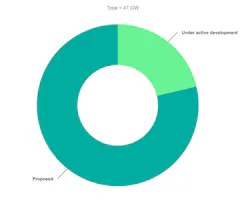
“In the context of a supply crunch for gas turbines, it is not clear that onsite generation necessarily promises a faster route to market for data centers at scale,” IEC said. “Though uncertainties are high, around 15‑27 GW of onsite natural gas may power data centers by 2030, mostly in the United States.”
For related articles, visit the Business Topic Center.
For more information on high-speed transmission systems and suppliers, visit the Lightwave Buyer’s Guide.
To stay abreast of fiber network deployments, subscribe to Lightwave’s Service Providers and Datacom/Data Center newsletters.
About the Author
 Sean Buckley
Sean Buckley
Sean is the Editor-in-Chief of Lightwave. He establishes and executes Lightwave's editorial strategy across its website, email newsletters, events, and other information products. Before coming to Lightwave in July 2023, he served as editor of Broadband Communities. Earlier, he served as senior editor of FierceTelecom and the editor of the former Telecommunications Magazine. He got his start in the optical industry in 1998 when he became the editor of enterprise and optical networks at Information Gatekeepers. He has a BA in English from the University of Massachusetts, Boston, and lives in Dracut, Mass, with his wife, two sons, and his cat, Dove.