GoNetspeed’s Brooks rises to fiber connection challenge
Key Highlights
- Chris Brooks was awarded the Connect the Unconnected Award for his work expanding fiber broadband to rural and underserved communities.
- GoNetspeed passes over 100,000 residences annually, focusing on local engagement and community trust in broadband deployment.
- The company collaborates with government agencies and community organizations to address regulatory hurdles, such as pole attachment delays.
- Workforce development is a priority, with programs like OpTIC Path training over 1,550 students to meet fiber technician demand.
- Brooks advocates for policy changes like one-touch make-ready to streamline pole attachment processes and accelerate fiber deployment.
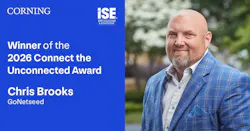
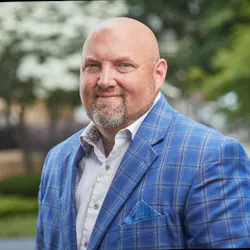
When Chris Brooks, GoNetspeed’s Senior Director of Operations, recalls why he focuses his efforts on enabling fiber-based broadband in underserved communities, he immediately thinks about how school-age children were forced to learn remotely during the height of the COVID-19 pandemic.
At that time, he served as director of operations and service delivery at Ontario and Trumansburg Telephone Company, a family-owned telco in New York State.
“When the pandemic started, I was working for two local small hometown telephone companies, which were overbuilding our ILEC territory with fiber,” he said. “I was able to go into homes where young students were forced to do school remotely, with children crying because they were worried that they weren't going to be able to complete their schoolwork. And that's always stuck with me, like seeing children who want an education, want to continue to grow in life, and don't have the ability because they don't have broadband internet access.
Brooks was recognized for expanding fiber broadband to rural and underserved communities by winning the Connect the Unconnected Award at this year’s Fiber Connect show.
Presented by ISE Magazine in collaboration with Corning, the announcement was made Tuesday, May 19, at the Fiber Connect Conference and Expo at the Gaylord Palms Resort & Convention Center in Kissimmee, Florida.
He was recognized for expanding fiber broadband to rural markets where service remains limited.
Brooks has spent his career focused on bringing broadband to communities where reliable service remains limited. At GoNetspeed, he leads fiber expansion across the company’s footprint, passing more than 100,000 residences annually and nearly 300,000 since 2024. His work includes direct oversight of E-ACAM-funded fiber builds in"The biggest thing is Maine, Alabama, and Vermont, extending broadband service to thousands of homes in rural areas.
As a telecom veteran, Brooks has also made it a key priority to extend his collaborative attitude to other broadband providers. He has extended his expertise beyond GoNetspeed, volunteering to consult with more than 50 broadband providers nationwide on fiber deployment strategies that prioritize unserved residents.
Also, he is an active contributor to the New York State Telephone Association and a regular speaker on panels for the Fiber Broadband Association focused on reaching underserved communities.
Integrating with communities
When GoNetspeed evaluates an underserved or overlooked community, the service provider looks at markets where the only broadband options are usually traditional telco-based DSL or cable modem services.
Since GoNetspeed could be overbuilding an existing legacy provider, the intent is to provide an alternative fiber-based broadband source that offers not only higher speeds but also competitive pricing.
“We look at markets that don't have a fiber provider," Brooks said. "And if communities are only being served by an incumbent telephone company with legacy DSL equipment or the cable company, we know what's happening, right? We know they're getting gouged on price, and they're not getting reliable service. So we're not going to take 100% of the customers. Our goal is to provide an option for the community's residents.”
But as GoNetspeed enters a community, the focus is not just on installing fiber. The service provider focuses on what services it can provide and, unlike a large ILEC or cable operator, establishes a local presence in the community.
“It's not just about the fiber; it's about the services that you can provide,” Brooks said. “It's about the local feeling.”
It has been found that this strategy has worked in the New England states of Massachusetts and Rhode Island.
In Newport, Rhode Island, GoNetspeed partnered with the Rhode Island Commerce Corporation on a federally funded initiative to deploy fiber broadband to approximately 8,300 homes, supporting broadband expansion in a community with limited broadband access.
Likewise, in Massachusetts, Brooks collaborated with industry lobbying groups to advance modernization of pole attachment rules, a longstanding obstacle to fiber deployment, and negotiated a build agreement with the City of Springfield that prioritized expansion into the city’s highest-poverty neighborhoods. He worked directly with the Chair of Springfield’s Digital Equity Subcommittee to ensure the build reflected the community’s most pressing needs.
Brooks said, regardless of the region it serves, GoNetspeed retains a local touch, and its team supports the strategy.
“The biggest thing is if you can get your team to buy into exactly what you're doing, they go out, and they represent you to the best of the company's ability,” he said. “We invest a lot of money to become part of the community, not just get in and out and hope to make a quick buck.”
Building trust, education
While GoNetspeed also isn’t afraid of overbuilding communities with existing providers, just saying it is a fiber provider isn’t an immediate slam dunk.
Being the new provider in a city or town where the cable operator and telco have been the mainstays for decades means educating residents not only about who they are and why they are better than existing providers like Verizon or Comcast.
Brooks said the service provider faces a mix of responses.
“Everybody's looking for that high-speed internet, and not to get gouged by those companies," he said. "So, on the negative side, people ask, "What are you doing?" On the positive side, people are excited, especially the younger generations, and they're going to be raising their children with technology. So, they really embrace us coming to town and understand it's going to be disruptive for a little bit, but it's temporary.”
To gain a community’s trust aligned across all the groups involved in fiber deployment, GoNetspeed uses a multi-step process that begins with the government affairs and marketing team, which gets the word out that it is coming. However, the first indication that a community knows the service provider is when construction crews begin installing equipment and necessary facilities to deliver service.
“The construction team is the first face outside of the government folks in the community,” Brooks said. “So, they are a mouthpiece for us in the field. And then we follow up with door-to-door sales.”
Another way GoNetspeed ingrains itself in a community is by hosting events, which creates the perception that the service provider is committed to a long-term relationship.
“Everybody believes in what we're doing, and that's the nice touch that communities are seeing,” Brooks said. “They're like, okay, these guys aren't here temporarily. We invest, and we want to be there. We did hundreds of community events last year.”
Overcoming workforce challenges
As GoNetSpeed moves forward with its fiber expansion plans, it’s not immune to challenges related to labor training and contractor availability for installing fiber and related network equipment to operate the fiber network.
The Fiber Broadband Association notes that 180,000 additional fiber technicians will be required over the next decade. During the recent Fiber Connect trade show, it expanded its OpTIC Path program with 144-hour, apprenticeship-aligned training designed to prepare job-ready workers quickly and effectively.
OpTIC Path is now active in over 20 states, with eight additional states currently onboarding, and supported by more than 38 training partners, including community colleges, technical schools, workforce centers, and veterans’ organizations. Since its inception, the program has graduated more than 1,550 students.
While GoNetspeed is aware of the labor issues, the service provider has effectively navigated these challenges by maintaining a well-established network of contractor partners.
“We have great partners who have been with us a long time,” Brooks said. “They see our vision, they know where we're going, and they're good to us, and we're good to them.”
He added that, unlike other contractors “that just want to make the quick buck, we work so closely with everybody, whether it be sales contractor, construction contractor, splicing contractor, that say we don't succeed if you don't succeed.”
Navigating permitting, ROW challenges
While GoNetspeed continues to expand service into new communities, the main barrier it faces is gaining access to aerial utility poles.
Brooks noted that while the pole attachment process in Connecticut is simple, it is unnecessarily complex in states like Massachusetts and New York, delaying build-out. “If we could change something, it would be the pole attachment process,” Brooks said. “If the government wanted to step in and say, you know what, the FCC is going to have complete oversight of all fifty states and poll attachment laws, that would work for me.”
A key challenge in the pole attachment process is that access is controlled by the ILEC (Verizon) and the power companies. GoNetspeed has found that this process has been a struggle in Central Massachusetts.
In Massachusetts, GoNetpeed has worked with the state government in the hopes of changing and writing laws to allow easier access to the poles.
Last May, GoNetspeed hatched plans to invest over $250 million to deliver fiber broadband internet to dozens of communities throughout Massachusetts. Still, the service provider faces the common challenge of a lengthy process for attaching new fiber-optic cables to existing utility poles.
This call for pole attachment comes as the company’s investment would represent the provider’s most significant combined investment to date. It would bring service to at least 27 communities, including Haverhill, Beverly, Salem, Quincy, Yarmouth, Barnstable, and many others, with access to a competitively priced fiber-based broadband service.
GoNetspeed maintains that if the state adopts one-touch make-ready (OTMR), it could streamline the pole attachment process and deliver fiber-based broadband to communities faster. OTMR allows a single contractor to move existing utility pole attachments (cables) at once, rather than having each company move its own equipment sequentially.
“For five years now, we have been working with the state of Massachusetts to change and write laws to allow easier access to the utility poles,” Brooks said. “We’re actively building fiber in eight states right now and are operating in twelve, but every state has different pole attachment rules.”
The Massachusetts Department of Public Utilities and the Department of Telecommunications and Cable accepted written comments on proposed updates to the state’s utility pole attachment regulations. Initial comments were due May 12, 2026, and reply comments were due June 11, 2026.
Brooks welcomes such proposals. “I would love it if states would adopt a one-touch, make-ready process,” Brooks said. “That's what we're pushing for in Massachusetts.”
Overcoming fiber learning curves
Fiber may be the soup du jour for broadband access. Still, Brooks has seen how traditional service providers face a steep learning curve in implementing a sound plan—something he saw firsthand while working at the Ontario & Trumansburg Telephone Companies (OTTC).
In 2021, the family-owned OTTC was acquired by an Oak Hill Capital entity to expand its FTTH network across Upstate New York.
During his tenure at OTTC, Brooks also saw Oak Hill acquire Finger Lakes Technologies Group. This OTTC CLEC subsidiary built a 3,000-mile fiber network across Upstate NY to serve thousands of enterprise customers.
After 28 employees decided to return to OTTC, the 100-year-old telco knew it needed to develop a fiber broadband strategy to survive. Sadly, one of Brooks' colleagues who worked on OTTC’s FTTH network recently passed away.
Brooks admits that while the group it operated in had gained fiber network buildout experience with the CLEC, it did not immediately understand how to build an FTTH network.
“We had built a giant commercial network across upstate New York, and we're like, let's build fiber to the home,” he said. “Our owner didn't know how to do that, but we did it. It took us about a year and a half to build 675 miles, completely overbuilding both phone companies with fiber.”
He added that being part of a very small group that accomplished major things “is what I am most proud of because we didn't know what we were doing.”
Sadly, one of the builders of the network, who recently passed away, worked alongside Brooks and his team on a steep learning curve to build the company's fiber broadband network.
“We just knew the legacy of this company depended on us succeeding,” Brooks said. “The gentleman who passed away worked for the company for thirty years, and he didn't know how to do it. None of us knew how to do it. And it was really a group of people who were extremely dedicated and extremely loyal to the cause that were able to pull it off.”
For related articles, visit the Broadband Topic Center.
For more information on high-speed transmission systems and suppliers, visit the Lightwave Buyer’s Guide.
To stay abreast of fiber network deployments, subscribe to Lightwave’s Service Providers and Datacom/Data Center newsletters.
About the Author
 Sean Buckley
Sean Buckley
Sean is the Editor-in-Chief of Lightwave. He establishes and executes Lightwave's editorial strategy across its website, email newsletters, events, and other information products. Before coming to Lightwave in July 2023, he served as editor of Broadband Communities. Earlier, he served as senior editor of FierceTelecom and the editor of the former Telecommunications Magazine. He got his start in the optical industry in 1998 when he became the editor of enterprise and optical networks at Information Gatekeepers. He has a BA in English from the University of Massachusetts, Boston, and lives in Dracut, Mass, with his wife, two sons, and his cat, Dove.