Cable One’s CEO says major ILECs acquisition integrations give it a competitive window
Key Highlights
- Cable One is competing with large ILECs that have expanded their fiber footprint through acquisitions, creating a more competitive landscape.
- The company is focusing on expanding gigabit services, which are currently available in 40% of its footprint, to increase ARPU and customer value.
- Cable One is introducing new products such as mobile services, Whole-Home Wi-Fi, and premium support to deepen customer relationships and improve retention.
- Despite a 6.1% decline in broadband subscribers, the company sees growth potential in value-conscious segments and new connection strategies.
- CEO Jim Holanda highlights the importance of leveraging market disruptions caused by ILEC integration delays to gain strategic advantages.
Keep up to date with Lightwave’s Q1 2026 earnings coverage.
You can check our publication’s key segments:
And
Here are other stories on Cable One:
Cable One’s CFO says overlap of Verizon/Frontier and AT&T/Lumen deals is minimal.
Cable One’s MBI deal to bolster its business services capabilities
Cable One’s CEO says mobile will stem subscriber losses and raise service adoption
Cable One dips its toes into the mobile services pool
Cable One’s Q1 broadband subs dip, but new products and processes show growth promise
Cable One isn’t afraid of the large-scale deals being made by large ILECs. Instead, cable MSOs have an opportunity to sharpen their multi-service strategy to retain and expand their customer base.
In the markets it serves in the Midwest and West, Cable One faces two major ILECs, AT&T and Verizon, which completed large acquisitions of Lumen’s fiber broadband business and Frontier earlier this year.
These deals are significant in that they immediately bolster each provider’s fiber reach: AT&T gained about 1 million fiber customers and 4 million fiber locations across 11 U.S. states, while Verizon gained access to 10 million fiber passings.
However, Jim Holanda, who is in his first three months as CEO of Cable One, said the process of folding those assets into ILECs could be an upside.
“Given these bigger acquisitions announced by the ILECs and the integration work that they have to do and so forth, I think that gives us a window to hopefully potentially take advantage of that in a bigger way going forward,” he said.
Battling fiber, FWA competition
Cable One continues to see the competitive effects of ILECs in its markets, which are rapidly converting copper-based DSL customers to fiber and fixed wireless access (FWA).
Like its larger cable counterparts, Cable One saw broadband churn during the first quarter, losing 12,600 broadband subscribers, down 6.1% sequentially. It ended the period with a total of 887,100 data primary service units (PSUs).
Likewise, video PSUs declined 23% to 78,000. Total residential PSUs declined 8.3% to 1.02 million.

Todd Koetje, CFO of Cable One, said that ILECs converting DSL customers to FWA are tactical about customer retention.
“As we've talked about in the past, where the LEC has not upgraded to fiber and especially where that LEC has a fixed wireless access product for home broadband,” he said. “They've been very aggressive in attempting to keep the customers they already have, as their initiatives are not only focused on the customer side, but also on decommissioning that high-cost copper.”
He added ILEC’s conversions have “moved the DSL population down at a faster pace than it would have naturally because of those fixed wireless saves.”
While Verizon hasn’t been as aggressive with its FWA product yet, Cable One continues to see and expect deployments from T-Mobile and AT&T in the market it operates in today.
According to data Cable One has gathered from Open Signal, 80% of its footprint now has at least one FWA competitor.
Holanda said that while it saw broadband losses in the first quarter, it has a strategy that will continue to appeal to price-conscious consumers.
“Churn was elevated in the quarter, but remained primarily concentrated within our more competitive markets, which allow us to concentrate on our retention efforts where they can have the greatest impact,” he said. “At the same time, new connections improved year-over-year, driven in part by value-conscious customer segments. These customers are an important part of our segmentation strategy and remain a focus for us as we add them in an accretive way.”

Mobile, home products enhance ARPU
Cable One continues to see the effects of signing up customers at lower promotional rates, and elevated churn continues to affect ARPU. Still, the cable MSO remains confident it has the tools to raise ARPU.
One of the first elements of Cable One’s APRU growth plan is to expand the reach of its gigabit services throughout its footprint. Today, Cable One offers gigabit speeds in 40% of its footprint, where its competitors don’t.
“While we certainly expect that intensity to grow over time and have modeled that out and are thinking in those terms, we also have clear visibility in terms of as ILECs start to fiberize or third-party overbuilders start to come in with a fiber build,” Holanda said. “We see that coming well in advance, and we think we've built a pretty good playbook for defending against it.”
Holanda added that “we have a little bit more opportunity in terms of, again, getting higher speeds and getting a whole host of value-added services into our customers' kitchens and living rooms to help us as we go forward across those retention pressures.”
In addition to its targeted retention offers in our more competitive markets at lower rates, Cable One is enhancing its product set with new offerings such as its dedicated support program, whole-home Wi-Fi, and, more recently, mobile wireless service.
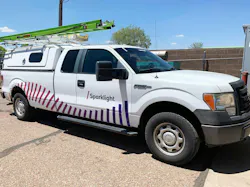
For example, its Tech Assist platform is a premium support service from Sparklight designed to help with connected devices and smart home setups. Starting at $10 a month, it provides access to U.S.-based experts for everyday connectivity issues, device troubleshooting, and equipment replacement or repair.
“We are deepening multiproduct customer relationships through offerings such as mobile, Whole-Home Wi-Fi, enhanced online security, and comprehensive technical support for the connected home, all while continuing to invest in the network to strengthen further the consistent, reliable experience our customers expect,” Holanda said. “While still early, these are the types of operational actions we believe can improve retention trends over time.”
Mobile will also play a role in Cable One’s ARPU playbook. While its mobile service is relatively new, Holanda, who previously oversaw the launch of Astound Broadband's mobile service, sees its potential to bolster its bond with its customer base further.
“We are roughly 2 months into our MSO-wide mobile launch,” he said. “And while it is too early to conclude retention or lifetime value, initial customer response has been encouraging. We continue to believe mobile service can become an important component of the broader relationship over time.”
Revenue hits and misses
Cable One’s churn challenges in its residential segment, particularly declines in broadband and video service revenue, weighed on the company’s revenue, which dipped 7.3% to $353 million, with $10.0 million of the decrease attributable to lower residential video revenue.
Residential data revenues were also down 5.1% to $213.6 million in the first quarter of 2026, compared to $225.1 million in the first quarter of 2025, a decrease of $11.6 million, or 5.1%, year-over-year. Likewise, residential data revenues declined $6.1 million, or 2.8%, on a sequential quarterly basis.
Koetje noted that the “year-over-year decrease was driven primarily by lower residential video and residential data revenues.”
However, declines in residential data were partially offset by a 0.8% increase in ARPU.
Finally, business data revenues for the first quarter of 2026 were $56.3 million, a decrease of $1 million, or 1.8%, year-over-year.
For related articles, visit the Broadband Topic Center.
For more information on high-speed transmission systems and suppliers, visit the Lightwave Buyer’s Guide.
To stay abreast of fiber network deployments, subscribe to Lightwave’s Service Providers and Datacom/Data Center newsletters.
About the Author
 Sean Buckley
Sean Buckley
Sean is the Editor-in-Chief of Lightwave. He establishes and executes Lightwave's editorial strategy across its website, email newsletters, events, and other information products. Before coming to Lightwave in July 2023, he served as editor of Broadband Communities. Earlier, he served as senior editor of FierceTelecom and the editor of the former Telecommunications Magazine. He got his start in the optical industry in 1998 when he became the editor of enterprise and optical networks at Information Gatekeepers. He has a BA in English from the University of Massachusetts, Boston, and lives in Dracut, Mass, with his wife, two sons, and his cat, Dove.