Dycom’s National Technology Integrators (NTI) acquisition soups up its data center and communications capabilities
Key Highlights
- Dycom's acquisition of NTI is a strategic move to expand its capabilities in data center infrastructure and fiber connectivity across the U.S.
- NTI's expertise in structured cabling and security systems complements Dycom's existing electrical and communications services, enabling integrated solutions.
- The deal enhances cross-selling opportunities, leveraging existing relationships with hyperscalers and general contractors to grow market share.
- Dycom aims to support the rapid expansion of middle mile and long-haul fiber networks driven by hyperscaler demand.
- The integration of NTI is expected to accelerate Dycom's revenue growth in its Building Systems and Communications segments, which already saw significant increases in Q1 2027.

Keep up to date with Lightwave’s Q1 2026 earnings coverage.
You can check our publication’s key segments:
And
Here are other stories on Dycom:
· Dycom’s CEO says FTTH is the dominant driver in its communications segment
· Dycom’s CEO says it has secured half a billion in verbal agreements for BEAD projects
· Dycom’s Power Solutions acquisition bolsters its data center reach
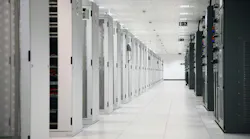
Dycom is acquiring National Technology Integrators (NTI) to enhance its capabilities in serving the growing data center industry and further bolster its communications services unit.
NTI is a fast-growing low-voltage engineering and construction firm based in Maryland that specializes in inside-plant structured cabling, including data centers, as well as audio-visual and security systems.
Daniel Peyovich, CEO of Dycom, told investors during its first quarter 2027 earnings call that the NTI deal is “a critical step that connects the work of both our segments.”
“We will be able to offer our customers complete fiber infrastructure, starting at the racks and connecting data centers across America, ultimately bringing fiber connectivity to businesses, communities, and homes,” he said. “Their work marries incredibly well with our inside-plant electrical work, as these trades are highly coordinated and in high demand.”
While NTI is based in Maryland, with much of its focus on the D.C.-Maryland-Virginia (DMV) area, the company also has operations spanning Texas and the Midwest, reflecting its work with general contractors and hyperscaler customers.
Set to close in the second quarter, the acquisition enables Dycom not only to grow its Building Systems segment but also to cross-sell its services.
“This cross-selling is already occurring,” Peyovich said. “Power Solutions and National Technology Integrators have been strategic partners for years and are currently working on projects together.”

Multifaceted benefits
While NTI may only now be becoming integrated into the Dycom fold, its Power Solutions division has worked with Dycom for several years, which is how it became aware of the company.
Peyovich said that after Dycom started talking to NTI about opportunities on the communications side and the work inside the fence at other facilities around the country, it identified efficiencies and began conversations about how it could “make them part of the Dycom Family.”
“What you see ultimately is the potential for campuses to have not only Power Solutions doing the electrical inside, but NTI also doing the structured cabling, while our communications business is doing the inside defense work and then ultimately connecting it back to the long-haul and middle mile routes,” he said.
Similar to the way Power Solutions works with general contractors, NTI also has relationships with hyperscalers.
“We get to have conversations on both those fronts, and we're already seeing, before the acquisition, just in conversations to try and sell that as a partnership, a good connection there,” Peyovich said. “And we think that's going to go exponential here now that they'll be part of the Dycom family next quarter.”
Middle mile picks up
Dycom’s timing in ramping up its data center capabilities comes as its customers are expanding their middle-mile and long-haul fiber networks to meet hyperscalers’ data center demands.
The company reiterated the forecast it issued during its second-quarter 2026 earnings call that outside-plant data center network infrastructure will be a $20 billion opportunity over the next 5 years alone.
Peyovich said its customers are being aggressive in pursuing the middle-mile fiber opportunity, which is set to ramp up this year, with significant growth in 2027 and beyond.
“We talked about this $20 billion opportunity probably 5 quarters ago, set related to long-haul, middle-mile. That has certainly grown,” he said. “We've updated numbers internally. What you've seen increasingly is our customers being very vocal about it.”
He added that one of Dycom’s customers said it is in discussions with hyperscalers about routes that could include 7,500 to 10,000 fiber strands per route. This is far beyond today’s usual amount of 864- or 1728-count fiber.
“If you think about getting to 7,500 or 10,000 over time, it goes back to what we said,” Peyovich said. “This is a decade-plus-long build to get the architecture that they need out there to support the continued development and the continued consumption of data.”

Communications and Building Systems dominate revenues
Dycom’s first-quarter 2027 financial results reflected growth in its communications and building segments.
Organic revenue of the Communications segment grew 24.7% to $1.57 billion, and Building Systems grew significantly compared to the prior year quarter. Building Systems represented approximately 20% of total revenue for the quarter.
Driven by ramping fiber-to-the-home (FTTH) programs, increased long-haul and middle-mile fiber infrastructure builds, and growing maintenance and operations services, Dycom’s communications revenue was $1.57 billion and grew 24.7% organically.
Likewise, Dycom saw revenue gains in Building Systems and Power Solutions. Building Systems’ total contract revenues were $395.4 million, while Power Solutions delivered $395.4 million of revenue.
During the first quarter, Dycom reported total contract revenues of $1.97 billion, up 56.1% year-over-year.
“This reflects the strength of relationships and continued diversification across our customer base,” said H. Andrew DeFerrari, CFO of Dycom.
The company has forecast growth for both its Communications and Building Systems segments.
For the Communications segment, Dycom expects contract revenues of $6.03 billion to $6.2 billion, representing organic growth of approximately 12.6% to 15.8% from last year.
For the Building Systems segment, we expect contract revenues ranging from $1.35 billion to $1.45 billion.
Looking forward to its full fiscal 2027, DeFerrari said Dycom “now expects total contract revenues to range from $7.38 billion to $7.65 billion.”
For related articles, visit the Data Center Topic Center.
For more information on high-speed transmission systems and suppliers, visit the Lightwave Buyer’s Guide.
To stay abreast of fiber network deployments, subscribe to Lightwave’s Service Providers and Datacom/Data Center newsletters.
About the Author
 Sean Buckley
Sean Buckley
Sean is the Editor-in-Chief of Lightwave. He establishes and executes Lightwave's editorial strategy across its website, email newsletters, events, and other information products. Before coming to Lightwave in July 2023, he served as editor of Broadband Communities. Earlier, he served as senior editor of FierceTelecom and the editor of the former Telecommunications Magazine. He got his start in the optical industry in 1998 when he became the editor of enterprise and optical networks at Information Gatekeepers. He has a BA in English from the University of Massachusetts, Boston, and lives in Dracut, Mass, with his wife, two sons, and his cat, Dove.