VIAVI targets the scale-out and scale-up Ultra Ethernet Transport testing opportunity
Key Highlights
- VIAVI's UET validation platform supports large-scale AI and HPC workloads with realistic traffic emulation and congestion control features.
- The solution enables cost-effective validation of AI fabrics without relying on GPU infrastructure, simplifying deployment and testing processes.
- Partnerships with Juniper and HPE showcase the practical application of UET in high-speed, multi-vendor environments, earning industry awards for performance benchmarking.
- Ultra Ethernet 1.0, released in 2025, enhances standard Ethernet to meet the demands of modern AI training and HPC workloads.
- VIAVI's platform facilitates faster, more reliable deployment of next-generation AI networks by providing detailed traffic analysis and validation capabilities.

What is Ultra Ethernet?
Ultra Ethernet is a high-performance network architecture designed specifically for Artificial Intelligence (AI) workloads and High-Performance Computing (HPC) clusters. Driven by the Ultra Ethernet Consortium (UEC), it enhances standard Ethernet to scale across millions of endpoints without the bottlenecks of traditional RDMA networks. The Ultra Ethernet 1.0 specification, released in 2025, focuses on upgrading standard Ethernet to meet the massive computational demands of modern AI training and High-Performance Computing (HPC).
VIAVI Solutions has launched an Ultra Ethernet Transport (UET) validation solution for AI fabrics, bringing traffic generation and analysis capabilities to hyperscalers, cloud and neocloud providers, and network equipment manufacturers across the broader Ultra Ethernet ecosystem.
While UET has emerged as an optimized standard Ethernet for massive-scale Artificial Intelligence (AI) and High-Performance Computing (HPC) workloads, VIAVI’s platform reflects the need for a solution that can accommodate the growth in size and complexity of data center fabrics.
Designed to accelerate the rollout of next-generation high-speed AI networks by validating scale-out and scale-up AI back-end networks using the Ultra Ethernet Consortium’s (UEC) Ultra Ethernet Stack, the new offering is a GPU-free, full-fidelity solution for VIAVI TestCenter.
The Ultra Ethernet Stack is purpose-built for large-scale AI and High-Performance Computing (HPC) workloads, with UEC 1.0 introducing a new UET protocol that delivers advanced congestion control and scalability, accelerating multi-vendor adoption of Ethernet as a primary transport for AI fabrics.
“AI clusters will soon scale to millions of endpoints, which means relying on physical GPUs alone to validate network behavior is no longer practical,” said Aniket Khosla, VP of Product Management, Optical Transport and High-Speed Ethernet, VIAVI. “While Ultra Ethernet delivers high throughput for AI and HPC along with the benefits of standardization, its success depends on rigorous, realistic testing.”
Reducing cost, complexity
Given the nascent nature of the UET market, the new VIAVI solution will be relevant to those seeking to reduce costs and complexity.
VIAVI’s UET validation solution enables customers to ensure their AI fabrics deliver the required performance and resilience without incurring the cost of deploying dedicated GPU infrastructure.
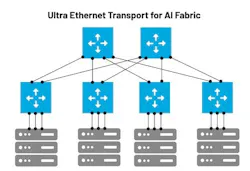
The solution emulates the transport layer of UET, replicating realistic, stateful AI traffic patterns at scale, including reliable ordered and unordered delivery (ROD/RUD), packet trimming, congestion control and dynamic multipathing.
It also supports full-fidelity emulation of AI workloads, such as collective communications (CCL) and large language model (LLM) flows. Additionally, the platform enables comprehensive validation of load-balancing mechanisms across the AI fabric, including ECMP, packet spraying and flowlet switching.
Khosla said VIAVI’s “GPU-free, full-fidelity UET validation solution gives customers the confidence to deploy scalable, high-performance AI fabrics faster and more cost-effectively.”
Focus on collaboration
VIAVI is not going it alone. The testing vendor has been collaborating with Juniper to illustrate the potential of UET.
During HPE Discover in Barcelona in January, HPE and VIAVI Solutions demonstrated how UET and packet trimming for dynamic congestion notification (DCN) can coexist with today’s Remote Direct Memory Access (RDMA) over Converged Ethernet version 2 (RoCEv2) workloads.
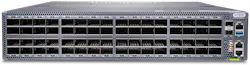
For this demonstration, HPE supplied the Juniper QFX5240 platform and Junos Evolved solutions.
This demo leverages the learnings the two companies gained from Interop Tokyo 2025. The joint VIAVI and HPE demonstration earned the Best of Show award for delivering a validated UET performance benchmark on the Juniper QFX5240 Switch, featuring 64 ports of ultra-high-speed 800G connectivity using the VIAVI B3 800G Appliance.
“The VIAVI TestCenter platform provides realistic traffic emulation and the granular visibility needed to validate congestion control and transport performance at scale,” said Mahesh Subramaniam, Senior Director of Product Management, AI Data Centers, HPE. “Through our collaboration, including UET transport validation using the Juniper QFX5240 platform and Junos Evolved with advanced software features such as packet trimming, we are demonstrating how advanced switching and realistic traffic testing enable faster deployment and reliable scaling of Ultra Ethernet in next-generation AI networks.”
For related articles, visit the Business Topic Center.
For more information on high-speed transmission systems and suppliers, visit the Lightwave Buyer’s Guide.
To stay abreast of fiber network deployments, subscribe to Lightwave’s Service Providers and Datacom/Data Center newsletters.
About the Author

Sean Buckley
Sean is responsible for establishing and executing the editorial strategy of Lightwave across its website, email newsletters, events, and other information products.