Armstrong sets an evolutionary coax, fiber broadband path
Key Highlights
- Armstrong employs phased fiber rollouts, focusing on high-density areas first to optimize marketing and operational efficiency.
- The company leverages hybrid network strategies, including RFOG and virtualized platforms, to transition smoothly from legacy HFC to fiber-based services.
- Customer experience remains central, with speeds ranging from 25 Mbps to 3 Gbps, including a 3 Gbps tier using XGS-PON architecture.
- Armstrong's upgrade path includes deploying DOCSIS 3.1 and high-split configurations to deliver gigabit and multi-gigabit speeds over existing HFC infrastructure.
- The strategic use of same enclosures for HFC and PON allows flexible scaling and migration, reducing costs and simplifying operations.
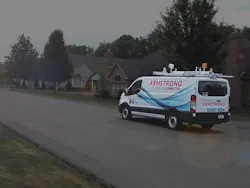
Armstrong, an independent cable operator, is pursuing a fiber broadband strategy that allows it to expand services while balancing capital investment, revenue protection, and competitive pressures.
Through phased fiber rollouts, pricing alignment, and service-tier strategies, the service provider is minimizing customer disruption, reducing churn, and maintaining ARPU during migration.
This includes developing a data-driven framework to identify high-value fiber deployment opportunities and executing hybrid network strategies that strengthen long-term business performance.
Covering a five-state territory as a traditional HFC operator, Armstrong has been building on its PON-based fiber build-out strategy for several years.

Eric Svenson, VP of Technology, Engineering, and Operations for Armstrong, said during the Broadband Evolution Playbook program at the recent SCTE TechExpo26 show that its Greenfield network build-out strategy centers on PON-based fiber services.
“At Armstrong, we cover a five-state territory in the Mid-Atlantic region as a traditional HFC operator, but we’ve been doing PON and fiber for some number of years now,” he said. “In many areas, it got to a certain point when PON was readily available, and we were deploying in new markets and edge outs, and we kind of made the decision to start new deployments with that versus HFC.”
He added that the focus of the PON upgrades ultimately centers on improving how customers access the network.
“We looked at our networks, as many other operators would, and looked at the path to upgrade that network experience for customers,” Svenson said. “And we felt that in certain areas we wanted to build out fiber over our HFC network as kind of an evolution versus going through the traditional upgrades that we've done over the last many, many, many years. Then, we've seen with the ability of fiber with GPON, as PON and beyond, that's a good migration path for us.”
An evolutionary approach
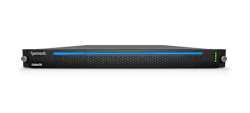
Armstrong is taking an evolutionary approach to its network upgrades. While Armstrong uses other technology partners, including Adtran, for its pure FTTH (Fiber-to-the-Home) GPON and XGS-PON deployments, its relationship with Harmonic bridges the gap between older coax infrastructure and next-generation fiber.
The service provider is leveraging Harmonic’s cOS Broadband Platform (formerly known as CableOS) alongside Distributed Access Architecture (DAA) to transform its traditional Hybrid Fiber-Coaxial (HFC) network. This migration replaces outdated, power-heavy legacy Cable Modem Termination Systems (CMTS) with virtualized software, reducing physical footprint and energy costs while enabling multi-gigabit broadband speeds.
As it considers its fiber broadband network upgrades, Armstrong has to weigh its two market strategies: suburban and rural.
Svenson said that, when looking at the suburban and rural areas it serves today, Armstrong considered its existing plant and what it would need to do to upgrade it.
“It made sense in some of our denser areas where we had more homes passed to do the fiber deployments there, but it's difficult because some of those markets are both suburban and rural,” he said.
He added that it focused on covering one network hub or system at a time with fiber, which made it easier to market and sell consumer broadband services.
“This process makes it easier from a sales and marketing perspective because we're not saying, well, if you're on this side of the road, you can get this service, and if you're on that side, you can get another,” Svenson said. “We tried to be consistent.”
Besides having a consistent look for its customer base, Armstrong needed a way to ensure efficiency for its technician workforce that could accommodate both the existing HFC and emerging fiber networks.
“Maintaining two different networks is definitely difficult,” Svenson said. “With our workforce, we want to make sure that we ease the pain for the existing techs as well as building those skill sets as we bring in new techs.”
Customer experience focus
As Armstrong moves forward with any network upgrade, the key consideration is how it will affect customer experience.
Addressing customer needs, whether Armstrong delivers broadband over HFC or fiber, will be key as it seeks to differentiate itself from other aggressive large telcos such as Verizon or national cable providers.
“With anything we do, we think of what the customer experience is, what the customers are looking for,” Svenson said. “And with the telephone companies coming into our markets, we must stay competitive, so it's got to be a good offering. We don't just think about what's happening in the core or edge or to the customer; we also have to consider what that experience is in the home.”
Depending on a customer’s location within its network footprint, Armstrong offers speeds ranging from 25 Mbps to 1 Gbps. It also offers a 3 Gbps tier leveraging XGS-PON network architecture.
Unsurprisingly, one particular focus for Armstrong is ensuring it can address customers’ upstream needs.
“Subscriber needs have changed, and upload speeds are being used way more than they ever have before,” Svenson said. “As we looked at it and we wanted to, we always want to look at a long-term approach and what that strategy looks like in the next three, five years, and we want to be going towards a migration path that makes sense.”
What is a high-split?
A high-split is a cable internet network design that expands the upstream (upload) frequency range to 5–204 MHz while moving the downstream (download) frequency to start at 258 MHz and higher.
Hybrid upgrade approach
As a traditional cable operator, Armstrong took a hybrid network upgrade approach.
This approach considered a long-term vision that could not only accommodate subscriber speeds, but also manage nodes, oversubscription, and congestion issues.
During this process, Armstrong created a path to migrate customers from DOCSIS 3.0 to 3.1 and 4.0 to provide gigabit speeds over its existing HFC plant.
“What we've done in certain markets is we've started to deploy DOCSIS 3.1 in a high split configuration,” Svenson said. “We're able to give those gigs symmetric speeds that are fiber-like.”
In the near term, Armstrong is deploying DOCSIS 3.1 and newer cable modems to deliver multi-gig services. By using a high-split offer of 1 Gbps in the upstream, Armstrong can deliver multi-gigabit services.
The service provider can upgrade its HFC customers to a high-split configuration, which offers more bandwidth options.
“We feel that in most markets, a gig on the upstream is going to be beneficial and good for those customers,” Svenson said. “And then we'll later assess and then migrate from that high-split offering to PON in the future.”
A flexible upgrade path
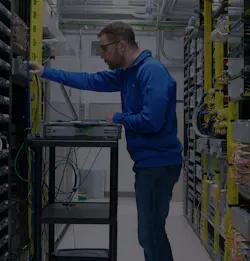
Armstrong leverages Harmonic's virtualized broadband technologies, including its cOS platform, to transition toward DOCSIS 4.0 infrastructure and expand PON-based FTTH services.
By using the Harmonic platform, Armstrong can deploy HFC and PON in the same enclosure and use the same back-end systems.
Additionally, Armstrong has been leveraging RFoG, which replaces the coaxial cable portion of a traditional HFC network with a single-fiber PON. As an early RFoG pioneer, it adopted the architecture to reach new customers and meet subscribers’ growing demand for high-bandwidth services, particularly in rural areas.
“When we're looking at different opportunities, wanting to go and upgrade to 3.1, and then when we can do a virtual core and remote by nodes that could also do PON, it was really helpful in us deciding to go that route,” Svenson said. “One of the things that we have to do in a hybrid situation is we've got a lot of RFoG out there as well, so we have a combination of traditional HFC and RFoG.”
Svenson added that deploying PON from the same enclosures enables it to offer RFoG customers “a better experience and solution.”
“One common platform gives us the opportunity over time--whether it becomes a need based on subscriber growth, home growth, or just the demand in that area--we can slow that migration or do it at a pace that works for us,” he said.
A phased rollout
With a focus on a phased rollout, Armstrong is upgrading DOCSIS customers and giving them special gigabit speeds, then allowing PON to scale as needed.
Based on market demand, the provider wanted to upgrade its HFC networks and then have a path toward PON.
“We really do focus on what our customers and communities need, and we want to keep demand with that,” Svenson said. “We look at the subscriber growth, the traffic, and want to make sure that we're on the right journey in the right areas at the right time.”
By leveraging existing capital expenditure and network deployments, Armstrong has already factored in how it affects the buildout's economics.
“Being able to leverage a technology that can grow or add new features is very beneficial,” Svenson said. “The other thing is when you are dealing with multiple technologies, which could be different configurations and different systems, it is more of a seamless transition.”
He added that being able to work within the same ecosystem and then move to new technologies really has been beneficial.
“The investment we've made is not lost because we're just swapping out some components to go towards what's new, which is what you have to do in most systems,” Svenson said.
While Armstrong didn't anticipate early in the upgrade process that moving customers from HFC to PON is sometimes difficult, the focus was to ensure consistency regardless of the last-mile infrastructure they're served off.
But despite the new speeds and capabilities FTTH offers customers, as well as the efficiencies of operating a common network, some of Armstrong’s customers weren’t in any hurry to switch to fiber.
“Our approach is we want to make sure that it's a great experience whether you're on HFC or PON,” Svenson said. “And the biggest winning factor in money savings will be when we're on one network versus operating both. It was a surprise that some customers were hesitant to move to fiber.”
Before conducting its high split, Armstrong had different tiers based on where customers were and the technology platforms. It can now offer a common set of speed tiers in its markets.
The migration strategy also allows Armstrong to offer a more consistent set of speed tiers across its footprint. It offers speeds from 25 Mbps to 3 Gbps on its fiber networks.
“As long as we can get to a hybrid situation where we have high split in most of our areas and fiber in others, we feel like we can have better consistent speed tiers,” Svenson said. “That helps with the offers we have out there. And what we're trying to do is enable higher speed tiers of packages available to those customers that want it.”
He added that while 1 Gbps is the foundation, Armstrong wants to be prepared to offer even higher speeds for customers who want them.
“We kind of feel like gig is going to be the baseline,” Svenson said. “And then some of those users are going to want multi-gig services, and we want to make sure that we're offering those to our customers, so the most important thing is that whatever the customer needs and wants are, we're meeting them regardless of the technology.”
Still, customer profiles vary within Armstrong’s footprint.
On one hand, some customers are willing to pay a premium for a broadband-only service like a 3 Gbps option. However, others still want to access a hybrid video offering that combines live TV and streaming.
“With the services we offer, having a video product has really helped us maintain our base," Svenson said. "Some customers want a dumb pipe, and they may look for the least expensive option, but most of our customers are looking for a customer-driven company that has many services that they're looking for us to offer.”
For related articles, visit the Broadband Topic Center.
For more information on high-speed transmission systems and suppliers, visit the Lightwave Buyer’s Guide.
To stay abreast of fiber network deployments, subscribe to Lightwave’s Service Providers and Datacom/Data Center newsletters.
Armstrong leverages public-private partnerships to deepen rural West Virginia broadband reach
Armstrong’s rural West Virginia broadband build underscores the impact public-private partnerships have in connecting the state’s most remote communities. Through the federal Broadband Equity, Access, and Deployment (BEAD) Program, West Virginia’s Line Extension Advancement and Development (LEAD) Program, and FCC’s Enhanced Alternative Connect America Cost Model (Enhanced ACAM) program, Armstrong is deploying more than 500 miles of fiber infrastructure that both expands broadband access to over 5,000 unserved locations and sustains service for approximately 10,000 rural homes and small businesses. Together, the effort represents more than $100 million in public and private investment in West Virginia's future.
About the Author
 Sean Buckley
Sean Buckley
Sean is the Editor-in-Chief of Lightwave. He establishes and executes Lightwave's editorial strategy across its website, email newsletters, events, and other information products. Before coming to Lightwave in July 2023, he served as editor of Broadband Communities. Earlier, he served as senior editor of FierceTelecom and the editor of the former Telecommunications Magazine. He got his start in the optical industry in 1998 when he became the editor of enterprise and optical networks at Information Gatekeepers. He has a BA in English from the University of Massachusetts, Boston, and lives in Dracut, Mass, with his wife, two sons, and his cat, Dove.