Avago designates BTS product family
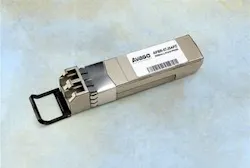
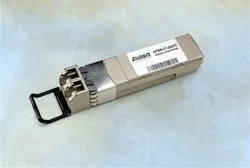
SEPTEMBER 17, 2007 — Avago Technologies released optical transceivers for the broad wireless base station market, part of a product family targeting next-generation, wireless infrastructure networking equipment. The AFBR-57J5APZ optical transceiver is built to support industrial-level temperature ranges and open standards for the base transceiver station (BTS) market.
With high-speed serial links over multimode optical fiber at 3.072 Gbit/sec. (OBSAI/CPRI standard), the AFBR-57J5APZ operates between -40° and +85°C. Link distances equal 500 meters over OM3-grade fiber.
Avago's product line for the BTS market will include multi-mode and single-mode optical transceivers. Single-mode transceivers supporting distances up to 80 km will be available by end of 2007. The modules target emerging open base station architecture initiative (OBSAI) and common public radio interface (CPRI) standards for next-generation wireless base-station systems. Data-rich content is driving improvements in base-station system performance, says Dave D'Andrea, director of marketing for Avago Technologies' fiber-optic products division. He adds that the product line is designed for cost-effective, higher-performance systems.
The multi-mode AFBR-57J5APZ wireless base-station transceiver debuts at ECOC, Booth 17123. The AFCT-57J5APZ (7 km, SM, OBSAI/CPRI, 3.1 G) and AFCT-57J5ATPZ (20 km, SM, OBSAI/CPRI, 3.1 G) will debut in October 2007. Avago plans to release the AFCT-57xxxxxZ (40/80 km, SM, OBSAI/CPRI, 2.47 G) at the end of 2007.
Visit Avago