AT&T’s D-Wave quantum pact achieves new network efficiencies
Key Highlights
- AT&T is integrating D-Wave's quantum annealing technology into existing AI tools to solve complex network optimization problems more efficiently.
- Early results show a reduction in processing time for network workloads from one hour to less than 15 seconds, enabling faster decision-making.
- The company plans to expand quantum applications to outage detection, technician routing, and traffic management to support its growing 5G and fiber networks.
- AT&T is also exploring quantum security solutions, including quantum key distribution and post-quantum cryptography, to safeguard future communications.
- Other service providers like Orange and Telus are investing in quantum-safe networking and long-distance quantum communication trials, indicating industry-wide adoption.

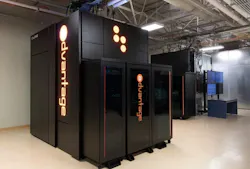
AT&T’s move to expand its use of D-Wave's quantum computing technology reflects the service provider’s plans to address optimization challenges across its network operations.
An initial focus for AT&T is to layer D-Wave's annealing quantum computing technology into the tools that are already powering AT&T’s agentic AI solutions.
D-Wave's quantum annealing technology is a specialized analog computing approach designed to solve complex optimization problems by letting physical systems naturally find their lowest energy state.

For AT&T, agentic AI is about enhancing how it operates its network.
Agentic tools in AT&T’s network are improving network operations like outage detection and management, reducing customer downtime by 12 million hours in 2025. Further, AT&T said that quantum capabilities could help increase the benefits of agents in AT&T’s network operations.
“D-Wave’s annealing quantum computing technology gives us a new way to approach optimization and high-intensity compute challenges across AT&T’s network operations,” said Lucus Haugen, director, Data Science for AT&T’s Chief Data Office.
New efficiencies
A key focus for AT&T is centered around gaining new efficiencies.
In one of its first applications, AT&T used D-Wave's technology to reduce the processing time for a network optimization workload from approximately one hour to less than 15 seconds.
Based on these early results, AT&T plans to explore using D-Wave’s quantum computing technology across a broader set of applications, such as outage detection and response, technician routing, network build planning, and traffic management.
Through these applications, AT&T said it will explore how faster processing could translate into faster and more accurate planning, as AT&T scales its converged fiber and 5G network to meet growing AI-driven demand.
“The speed we’re seeing with D-Wave challenges what’s currently possible. It has the potential to help us optimize faster, increase efficiency and scale more real-time operations, making quantum a practical tool for advancing how we run and modernize our network.”

Eying security, communications applications
Enhancing network operations is only one benefit that AT&T sees with D-Wave and quantum computing overall.
The service provider is also evaluating D-Wave's forthcoming gate-model systems for potential applications in quantum security and quantum communications.
Its agreement with D-Wave is part of AT&T's broader innovation strategy, which applies quantum computing, AI, automation, advanced analytics, and software-defined infrastructure to modernize how the network is built, run, and optimized.
“AT&T’s work with D-Wave is an example of how leading enterprises are beginning to turn to quantum computing for solving real business problems,” said Alan Baratz, CEO of D-Wave. “AT&T has incredibly complex optimization problems across its network operations, understands where classical computing is challenged, and is moving quickly to explore where quantum can make an impact.”
Service providers raise the quantum bar
AT&T may be the latest provider to put a stake in the quantum computing ground, but they are hardly alone.
Other global service providers, including Orange and Telus, are also getting into the game.
Last June, Orange Business and Toshiba Europe launched a quantum-safe networking service in Paris, France, to protect large businesses against future quantum computing cyberattacks.
Leveraging Toshiba’s Quantum Safe Networking technology, Orange Quantum Defender combines Quantum Key Distribution (QKD) with Post-Quantum Cryptography (PQC) for in-depth defense.
In February, TELUS worked with Photonic to transfer quantum information over 30 km of its already installed fiber. According to Photonic, what was different about this trial was that it completed the transfer of quantum information to a remote processing node, a critical capability for establishing long-distance quantum networks and commercial-scale quantum computers.
Optical vendors like Belden and PacketLight are also becoming active in the quantum arena.
Belden entered a partnership with the Chicago Quantum Exchange (CQE), a hub for quantum science and engineering, in a move that gives it a greater foothold in the quantum-safe networking solutions market. By becoming affiliated with CQE, Belden gains access to quantum research, startup ecosystems, and collaboration opportunities with major technology companies, national laboratories, and academic institutions.
PacketLight, meanwhile, has been an active participant in quantum computing trials and deployments.
In February, PacketLight Networks entered a partnership with post-quantum cyber defense developer Quantum XChange to integrate advanced post-quantum cryptography (PQC) into its optical transport hardware portfolio.
Earlier, through a partnership with Toshiba, PacketLight showcased quantum key distribution (QKD) over DWDM links in 2024, highlighting the growing interest in quantum communications networks.
For related articles, visit the Business Topic Center.
For more information on high-speed transmission systems and suppliers, visit the Lightwave Buyer’s Guide.
To stay abreast of fiber network deployments, subscribe to Lightwave’s Service Providers and Datacom/Data Center newsletters.
About the Author
 Sean Buckley
Sean Buckley
Sean is the Editor-in-Chief of Lightwave. He establishes and executes Lightwave's editorial strategy across its website, email newsletters, events, and other information products. Before coming to Lightwave in July 2023, he served as editor of Broadband Communities. Earlier, he served as senior editor of FierceTelecom and the editor of the former Telecommunications Magazine. He got his start in the optical industry in 1998 when he became the editor of enterprise and optical networks at Information Gatekeepers. He has a BA in English from the University of Massachusetts, Boston, and lives in Dracut, Mass, with his wife, two sons, and his cat, Dove.