Merrimac, Mass and Ripple usher in new broadband competitive era
Key Highlights
- Ripple Fiber is expanding into Merrimac after Breezeline withdrew, giving residents a new wireline broadband alternative to Comcast.
- Merrimac Municipal Light Department shared pole inventory and coordinated make-ready work to help speed construction.
- The utility says it has completed 92% of new poles and about 76% of make-ready work.
- Ripple’s network is expected to reach residents who currently lack Comcast service and have few or no internet options.
- The partnership reflects Merrimac’s preference to support broadband deployment without becoming a provider itself.
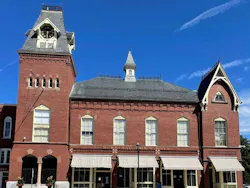
Merrimac, Mass., once known for its 19th-century carriage-making industry and mills, has become a quiet, largely residential community with a small-town New England feel. The town, which intersects Routes 495 and 95, is located about 34 to 40 miles northeast of Boston and sits near Lake Attitash.
In addition to offering its own electric service through its municipal light department, Merrimac has added fiber broadband to its list of amenities through a partnership with Ripple Fiber.
However, the Merrimac Municipal Light Department isn’t interested in content or broadband delivery. The municipal electric company, founded in 1904 as a community-owned, not-for-profit electric utility, is happy to have someone else do the job.

Mary Usovicz, General Manager of the Merrimac Municipal Light Department, said that while she recognizes the efforts of other municipalities, the utility is happy to let a broadband provider like Ripple handle the job instead.
“We have enough to worry about by being an electric provider,” she said. “Broadband is a mature market, and I’m not going to get into something I don’t have expertise in. I’d rather leave it up to the experts.”
With Ripple Fiber now investing in Massachusetts’ Essex County and expanding into Merrimac, construction continues in nearby Worcester County, specifically in Holden and West Boylston. The provider recently celebrated the launch of service for its first customers in the state, as more than 11,000 homes are now going live in Holden.
Eaton Fiber, a Verizon partner, is currently in the process of acquiring Ripple. The new structure will not affect the planned implementation in Merrimac, which is offering residents a fiber alternative and another broadband option. The only broadband option in the town was Comcast.
Fiber is a key enabler for cities and towns like Merrimac, not only making them attractive destinations for new residents and businesses but also providing the infrastructure to keep up with new demands driven by AI, data centers, and other platforms like quantum.
“Unless cities and towns start building out fiber infrastructure, getting to the next wave of innovation is impossible,” said Stehen Maher, director of government affairs for Ripple Fiber. “AI and quantum computing are going to need it; it can’t function on copper.”

Enabling broadband competition, choice
While Merrimac Municipal Light Department isn’t interested in becoming a broadband provider itself, it would like to give residents more choice.
After Breezeline dropped out of the running to provide broadband, the community found a new partner in Ripple Fiber, which Eaton Fiber is acquiring.
Merrimac, like other communities, has traditionally had little if any broadband competition. Outside of Comcast, the only option was traditional telephone service from Verizon and wireless.
“I did not like the fact that there was not competition,” Usovicz said. “So, when Ripple came and expressed an interest, and we did have Breezeline before them, we decided to give them existing inventory they needed to proceed with a fiber build.”
By working with Ripple, Merrimac has created a new competitive broadband situation. In Merrimac, the two main broadband providers are now Comcast and Ripple.
Since Ripple came into town, it appears to be making the incumbent player, Comcast, a bit more responsive.
During a quarterly customer event, Merrimac Municipal Light Department had a customer ask if a new provider was coming to town. Comcast finally returned the call after it left the cable MSO five years ago.
“One customer came to one of my quarterly Ask the General session and said, ‘ Is there a new internet provider coming because I put a call in five years ago to Comcast, and I just got a return phone call,” Usovicz said. “So, I think that says something, and competition brings about that.”
This journey to get Ripple into the town to spur new competition hasn’t been without its challenges. Breezeline, owned by Canadian conglomerate Cogeco, previously decided to withdraw from Merrimac.
Usovicz said the company didn’t provide any reason. “Breezeline changed their whole trajectory and didn’t give us a lot of explanation,” she said. “They just canceled their bond and said they weren’t going to move forward with the project.”
But when Ripple approached the town, the leaders told them to work closely with the new provider.
“The town said, ‘ Work closely with Ripple; we need competition,” Usovicz said. “Don’t lose them. Well, we’re going to make sure we get it all done fast because then they can’t leave.”
Streamlining make-ready
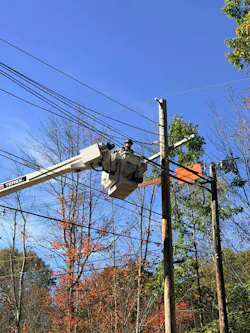
One advantage emerging service providers like Ripple gain from partnering with a municipal utility is the ability to streamline the often arduous, time-consuming make-ready process on existing utility pole infrastructure.
As a municipal electric provider, Merrimac Municipal Light Department can partner with Ripple to streamline the make-ready pole attachment process.
Make-ready is the work required to prepare a utility pole or site so it safely meets standards before new fiber lines, cables, or equipment can be attached.
Ripple, for its part, has mainly installed its fiber underground, while Merrimac’s infrastructure is mainly aerial.
But the utility decided the best path was to ease Ripple's make-ready process.
“When Ripple came, I said I am not for gouging a company, so instead of making them redo the inventory, which my guys already did, we gave it to them, so they would know how many make-readies and how many new poles that we need to do,” Usovicz said.
Interestingly, the make-ready process began with Ripple as Merrimac conducted improvement projects on its electric infrastructure.
In particular, the municipal provider is upgrading its AMI Smart utility metering systems (electric, gas, or water) that record and transmit consumption data back to utility companies in real time or at hourly intervals.
“Ripple’s move into Merrimac is coming right at the beginning of my big capital improvement budgets,” Usovicz said. “We’re doing a lot of capital projects, including a big AMI meter switch out.”
The electric company initially had a first-generation set of AMI, but is upgrading them to improve visibility into its electrical performance.
“We had such a first generation of AMI,” Usovicz said. “So that just brings you to the story where I said I can have my guys work overtime if you’re willing to pay for it and it’s been a win-win.”
As of this summer, Merrimac Municipal Light Department had completed 92% of new utility poles and about 76% of the make-readies.
“With the make-readies, we concentrate on the new poles because we can be moving up our power while they’re attaching in the communications space,” Usovicz said. “It’s been a great partnership that has worked well, and my customers are thrilled because they have competition now.”
What is H.3546?
Presented by Massachusetts Representative Angelo Puppolo of Springfield, H.3546 is a petition (accompanied by bill, House, No. 3546) for legislation to establish standards for the pole attachment process to facilitate the construction of broadband networks. Telecommunications, Utilities, and Energy. The bill would establish standards for the pole attachment process for constructing broadband networks utilizing One Touch Make Ready (OTMR).
What is S.2285?
Similar to H.3546, S.2285 is an act proposed by the Massachusetts Senate to establish standards for the pole attachment process to facilitate the construction of broadband networks utilizing One Touch Make Ready (OTMR). Massachusetts Senator Adam Gómez presented the act.
Massachusetts’ make-ready position
While other states have embraced pole attachment policy upgrades like one-touch make-ready (OTMR), Massachusetts’ pole process has been criticized as being outdated.
OTMR is a set of statutes and local ordinances passed by various local governments and utilities in the United States that require utility pole owners to allow a single construction crew to make changes to multiple utility wires.
The Massachusetts Joint Committee on Telecommunications, Utilities, and Energy supports two bills proposed by the state’s House of Representatives and Senate: H.3546 and S.2285.
These bills would establish standards for the pole-attachment process for constructing broadband networks using OTMR.
However, Merrimac Municipal Light Department does not support OTMR, citing safety concerns that could arise if other contractors conducted make-ready work on its poles. Merrimac Municipal Light Department testified on its position through the Municipal Electric Association of Massachusetts.
“Our guys can and will get the work done, and this is testimonial for what we did for Ripple; we don’t need a third party coming in here doing make-ready or even new poles,” Usovicz said. “We have the people and the expertise, and we don’t want the liability because we have joint ownership with Verizon on the poles.”
She added that after an attachment goes through what’s called the process engines and the work is done, liability shifts to Verizon and the utility company.
“If someone set that pole incorrectly, or did not do the attachment, it will be on us,” Usovicz said. “We’ll be paying for the windshield that got damaged or the person who got injured who happened to be walking under that pole.”
While Usovicz understands the broadband companies’ frustration, she suggests they should address the problem instead of just trying to work around it. Further, they should ask why large utilities can’t be as responsive as municipal providers like itself.
“If the large utilities are being unresponsive, then exclude the municipals,” she said. “If you’re going to let the legislation go through, then exclude the municipal electric providers.”
Being the operator of the municipal utility platform, Merrimac Municipal Light Department was able to respond quickly to Ripple.
The utility also has continued to be cited for its customer service and reliability.
However, Usovicz emphasized that if the utility makes a mistake, “tell us and we’ll correct it, but we sometimes get lumped into a lot of things that they’re trying to get the investor-owned utilities (IOUs) to do.”
Targeting unserved areas
While Comcast has been the mainstay broadband provider, its service doesn’t reach every resident in town, leaving some residents unserved. Some pockets of the town remain unserved.
Ripple’s entrance will immediately give these residents a chance to have a broadband wireline connection.
“We even have some parts of town that aren’t even serviced by Comcast,” Usovicz. “There are some residents that have no internet, and they are thrilled that they’re finally going to have some internet.”
Changing perceptions among residents, particularly older residents, will be a key challenge.
One question that the utility gets is how to access video content.
“The older customers don’t understand, because they’re like, do I get channels? Usovicz said. “We are telling them with Ripple’s service, you can get a million channels; you just get streaming services.”
Leveraging Ripple’s expertise
Municipal electric players working with an established provider like Ripple have become an option for cities and towns that want broadband. A municipality can partner with someone that already has fiber broadband expertise yet does not want to be a provider, creating a positive outcome.
Merrimac is hardly alone in its approach. Georgia-based electric cooperative Colquitt Electric Membership Corporation (EMC) entered a pact with Windstream, now Kinetic, to deliver fiber-based broadband to its South Georgia customers.
Likewise, Alabama Power and Entergy entered pacts with C Spire to deploy fiber in their respective electric service territories, and Appalachian Power is working with GigaBeam Networks to bring broadband to unserved customers in Grayson County, Virginia.
For municipalities like Merrimac, the idea is simply that they don’t have the knowledge to run a fiber broadband network.
“Why would I get involved in something like building out broadband? I mean, I have no expertise,” Usovicz said. “All I have is the ability to attach a fiber to a pole.
She added that “technology moves way too fast, and it’s not my area of expertise, but we’re getting our customers what they want, which is fiber.”
Merrimac has been alerting its electric customers on its website that Ripple will offer service.

For its part, Ripple is introducing itself to residents as it begins installing a fiber network in the town.
“Once we actually start installing, what we’ll do is actually door-to-door sales,” said Maher. “We’ll have a sales team come out, knock on doors, and we’ll talk to people about the product and what it’s going to offer them. And best-case scenario, they sign up right there.”
He added that “we do really like to over-communicate the entire process, so that’s one way we kind of get the word out is obviously working through the community, which has worked a lot.”
Ripple also must actively communicate to residents in new developments that leverage underground facilities for fiber and utility services that it will also serve. The provider has its own team that works with new condo developers and HOAs.
While Ripple specializes in underground fiber expansion, it is doing aerial work for Merrimac because it made great sense to work with the local utility.
Merrimac has seen more 55+ developments emerge in the town. Merrimac, Massachusetts, features several notable 55+ and active adult communities offering homeownership, condominium living, and rental options, including The Village at Merrimac and Regency Village Merrimac.
All of the new developments require underground facilities to house the fiber.
Usovicz noted that it gets calls about service. “They’re like, you need to, I got one, I sent it to you, like, you need to talk to the homeowners association before you can, I’m like, I’m not offering anything, talk to Ripple,” she said.
Ripple will reach out to condo associations or homeowners associations about bringing service to their facilities.
“We will get permission to go into HOAs, condos, any multiple dwelling units, where there’s a single owner or a governing body, and then it’s up to them if they want to have us in their area,” Maher said. “We’re not going to charge them anything until we provide service.”
Municipal partnership benefits
Ripple advocates underground fiber builds for a simple reason: the time it takes to get up on the poles.
Today, Ripple is working with three municipalities on fiber broadband projects; the unique element with Merrimac, West Boylston, and Holden is that all three of the towns have municipal light plants.
Maher said this structure lets it move faster with its fiber deployment.
Instead of waiting 14-18 months to get its facilities on a pole, the utility started doing the make-ready work immediately after it signed a contract with the town.
“I said this to the Board of Selectmen, and I’ve said this to Mary; rarely, a community moves faster than we do,” he said. “But when we work with a light plant, they’re able to start the make-ready process immediately.”
Ripple began its installation last November because it was trying to get in before the winter frost starts. The service provider set a goal to have the make-ready done by mid-September, and we guarantee all the new poles in August.
“We did make ready during the winter, and then right when the spring came, we went crazy with the new poles,” Usovicz said. So, we want to pride ourselves that it’s been less than a year.”
Maher agreed and added that “ it took less than a year, which again is unheard of working with any of the large electric companies.”
Community engagement
Being independent is key to Merrimac Municipal Light Department’s identity. Like nearby towns such as Holden, Merrimac is one of the few towns in Massachusetts where consumers can purchase power from an independent, town-owned entity.
In 2023, the town moved to sell the municipal utility to a private company, which required a two-thirds vote for approval at a town meeting.
However, at a town meeting, 782 opposed the sale, and six supported it.
“We did a deal with the unions who paid for everything,” Usovicz said. “We educated the public what was happening, and they came out in bigger numbers than the town ever expected.”
While some towns are against new independent providers, Merrimac’s leaders have supported Ripple.
Maher said that it communicated its plans to the selectmen and other community officials as it targeted Merrimac.
“Early on, we try and obviously kind of engage with the local officials, usually starting with town administrator, but Merrimac has a strong select board,” he said. “We engaged with them first, and they were very supportive, very excited about it. There has been a lot of interest in another provider coming in, and I think a lot of frustration with the incumbent provider, so they were supportive and have done everything they can to kind of help move this project along.”
Unlike Comcast and others, Ripple’s pricing has gotten lower across its speed tiers.
But now Comcast is starting to put together deals and programs and things like that that are going to lower prices for consumers.
“We’ve seen our own prices remain low for broadband,” Maher said. “Our prices have gone down, not up, since the first time we’ve approached Merrimac. So our base package is now better speeds at a lower cost than it was when we originally approached Merrimac a little less than a year ago.”
Usovicz agreed and added that fiber, combined with lower electric rates, makes the town even more attractive. “Our rates are 40% less than the IOUs, and you got fiber coming in,” she said.
For related articles, visit the Broadband Topic Center.
For more information on high-speed transmission systems and suppliers, visit the Lightwave Buyer’s Guide.
To stay abreast of fiber network deployments, subscribe to Lightwave’s Service Providers and Datacom/Data Center newsletters.
About the Author
 Sean Buckley
Sean is the Editor-in-Chief of Lightwave. He establishes and executes Lightwave's editorial strategy across its website, email newsletters, events, and other information products. Before coming to Lightwave in July 2023, he served as editor of Broadband Communities. Earlier, he served as senior editor of FierceTelecom and the editor of the former Telecommunications Magazine. He got his start in the optical industry in 1998 when he became the editor of enterprise and optical networks at Information Gatekeepers. He has a BA in English from the University of Massachusetts, Boston, and lives in Dracut, Mass, with his wife, two sons, and his cat, Dove.