FAA outage reflects the delicate balance of bridging the copper legacy and next-gen fiber
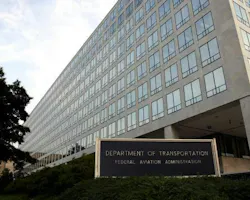

Flight delays and cancellations are an inevitable part of flying. Still, last Friday afternoon’s networking outage shows how aging telecom infrastructure has become a key weak point in one of the most critical transportation methods millions rely on every year.
As reported in Lightwave’s sister publication Cabling Installation and Maintenance, the Federal Aviation Administration’s (FAA) nationwide ground stop that was the country’s biggest news story on Friday, November 13, and through much of the weekend, was caused by a “pretty straightforward” cabling project, according to U.S. Transportation Secretary Sean Duffy.
In a news conference on Saturday, November 14, Duffy blamed the FAA contractor L3Harris, saying, “We haven’t determined what the fault was. Was it the router, or were they not doing great work for us at L3Harris?”
Interestingly, the FAA grounding seems to be just one of a string of events. Friday afternoon’s networking outage came the day after Microsoft saw a halt in its widely used Outlook application. Later, Chase Bank and the NSA also saw unexplained network disruptions.
Warnings about a potential larger issue with the FAA’s system continued to bubble up in recent years.
After a September 2025 telecom outage at the Dallas approach-control facility halted flights at both of the city’s major airports for hours, the agency blamed service failures by local carrier Frontier Communications, which Verizon acquired.
“Oversight by L3Harris, an FAA contractor, failed to ensure that redundancies in the system functioned properly,” the FAA said in a statement at the time.
L3Harris, which has run the FAA Telecommunications Infrastructure network, known as FTI, since its predecessor, Harris Corp., won the contract in 2002, responded that it and the carriers had warned the FAA for years that the circuits needed replacing, but no funds were dedicated to accelerating such an effort.
A balancing act
A routine copper-to-fiber upgrade by L3Harris at a remote site in El Dorado, Arkansas, caused a newly installed Juniper router to flood the FAA Telecommunications Infrastructure (FTI) network with over 1,000 connection attempts every few seconds.
While L3Harris said it had completed 70% of the copper-to-fiber conversions, Transportation Secretary Sean Duffy criticized L3Harris's network monitoring. He asked Congress for an additional $50 billion—on top of the $12.5 billion approved in 2025—to overhaul the aging air traffic control communications system.
The FAA is replacing about 2,000 Cisco 6000-Series routers with devices from Juniper Networks. Juniper Networks' parent, HPE, refuted claims in a Wall Street Journal report that the Juniper Networks router installed in southern Arkansas caused last Friday’s outage.
"Based on what we know today, the device functioned as it was configured to by the installer. It did not fail or act improperly," an HPE spokesperson told ABC News.

FAA administrator Bryan Bedford emphasized that the copper-to-fiber upgrade is separate from other upgrades the FAA is undertaking.
“I think we’re conflating ‘modernization’ with this upgrade at this particular facility,” he said. “We spend a billion dollars a year maintaining and sustaining the existing 1980s TDMI [time-division multiplexing infrastructure] telco network—call it 1G, the 1G system that the FAA is on. So we are constantly replacing 2000 Cisco 600 routers with Juniper routers. So, this is ordinary course-of-business stuff. This is not part of the Peraton-FAA $12.5-billion modernization effort, so let’s not conflate those two things.”
Ribbon Communications, an optical vendor making inroads with several federal agencies, including the Department of Defense (DoD), the Federal Aviation Administration (FAA), the Social Security Administration, and the Treasury, noted that replacing old equipment is only part of the equation.
The company emphasized that technology must be part of a balanced process in which upgrades work alongside existing systems. At the same time, critical services keep running, making it essential to detect problems quickly and prevent a failure in one part of the network from spreading.
“Events like the FAA outage show why network modernization can’t be treated simply as an equipment refresh,” said Joni Roberts, CMO of Ribbon Communications, in an e-mail to Lightwave. “In mission-critical environments, organizations have to modernize while continuing to deliver highly reliable services, which means resiliency, visibility and fault isolation have to be part of the transition.”
FAA’s fluctuating upgrade plan
The FAA’s communications network plan seems to be in flux.
FTI contractor L3Harris, which runs the legacy FTI network, has completed 70% of planned copper-to-fiber conversions across airspace communications. At the same time, ongoing work under the TDM Infrastructure Replacement (TIR) effort swaps out older hardware, such as routers and switches, alongside fiber conversions.
As FTI contractor L3Harris continues the copper-to-fiber conversions and runs the FTI network, the FAA tapped AT&T as the prime contractor to lead the FAA Enterprise Network Services (FENS) program, which replaces the aging legacy telecommunications backbone.
FENS is a single-award indefinite delivery, indefinite quantity (IDIQ) contract to succeed the legacy L3Harris-run network.
Initially, the FAA named Verizon as the prime contractor in 2023 in the 15-year FENS contract to modernize and secure communications across roughly 4,500 to 4,600 FAA facilities nationwide. However, the FAA restructured the contract in August 2026, naming AT&T as prime contractor and project lead (Verizon will continue to serve in a supporting role) to meet its accelerated 2028 deadline. AT&T was awarded a backed initial $74.3 million task order focused on early-stage planning and development.
With last Friday's ground stop, the transition is more urgent.
Besides AT&T, Duffy noted that Verizon and Lumen are ready to take on the network modernization task when Congress provides funding. It has not been revealed yet what role Lumen has in the FENS project.
“I have AT&T, Verizon, and Lumen all ready to go,” Duffy said while calling on lawmakers to provide additional funding.
The future of new updates remains uncertain.
In a joint letter, Duffy, Bedford, and White House Office of Management and Budget Director Russ Vought asked Congress to increase funding to $50 billion for the broader modernization effort.
Bedford said the FAA would review its upgrade protocols.
However, Bedford and Duffy did not indicate if further copper-to-fiber transitions would be paused. At the same time, investigators are investigating how the router upgrade brought the air control system to a halt.
“One of the biggest problems we continue to see is our network, and the architecture of our network is from 1980. We need modern technology and architecture,” Duffy said. “We have the architecture ready to build a state-of-the-art telecom system that will give us resiliency. All I need is the money to finish it. My hope is if they give me money today, I’ll be going tomorrow to build it, and this telecom system would be ready by the end of 2028, the first part of 2029.”
Telcos ramp copper-to-fiber conversion
The FAA’s move to transition its copper network to fiber is also being reflected by the service providers that it works with today.
The big three telcos—AT&T, Verizon and Lumen—are all in the process of transitioning their own legacy copper networks to fiber.
A Lumen spokesperson noted in a Data Center Dynamics report that the ground stop illustrates how the aging copper network isn’t designed to handle the large-scale traffic demands the FAA needs to operate the nationwide air traffic control network.

"These events made it clear we urgently need to modernize the US’s air traffic control system," said a Lumen spokesperson. "Decades-old copper networks were never built for today’s demands. That’s why we strongly support the federal government's efforts to modernize our networks. Lumen is working to retire its legacy copper and invest in modern network capabilities that mission-critical systems need.
As the third-largest telco, Lumen is working to retire its own copper network in various states, including Iowa, Florida, Nevada, and Utah. The service provider expects to generate up to $1.5 billion in pre-tax net copper recovery proceeds over five years.
"Copper is worth more to us mined than operated," said Lumen’s CEO Kate Johnson during its third-quarter earnings call, highlighting its ongoing shift to being a business-centric IP services provider. "We're no longer dependent on selling the next physical link to grow. We make money by moving data from anywhere to anywhere."

AT&T and Verizon are also moving fast to retire their copper networks as more consumer customers abandon traditional landline phone service for cellular and fiber-based broadband.
AT&T expects to retire copper-based services across most of its footprint by the end of 2029. In mid-October, AT&T stopped accepting new orders, moves, and changes for many copper-based services across nearly 20 states.
John Stankey, CEO of AT&T, noted during its third-quarter earnings call that it is working with customers to migrate them to new services, including its Phone Advanced voice service, fiber broadband service, and Internet Air wireless broadband service.
“We now have more than 100 wire centers with no customers supported by legacy services,” he said. “This is an industry-first at scale, and we're on track to reach our target of discontinuing copper-based services in 50% of our wire centers outside of California by the end of 2027 and substantially all of them by the end of 2029.”
Likewise, Verizon is also moving to retire its copper network infrastructure. In August, Verizon petitioned the FCC for permission to discontinue residential and business legacy TDM-based voice service on copper lines in Arizona, Delaware, New Jersey, New Mexico, Ohio, Rhode Island, South Carolina, Utah, and Virginia.
However, the FCC put the brakes on the telco’s copper retirement efforts, saying it needs more time to review the telco’s proposal.
Beyond transitioning customers to fiber broadband and alternative voice services, Verizon is using its copper transition to repurpose existing central offices (COs) into data centers.
“We have thousands of central offices, many of which we're taking copper out of, and we are retrofitting them to be remote data centers that are power-ready, permitted, fully redundant infrastructure,” said Dan Schulman, Verizon's CEO, during its second-quarter earnings call.
For related articles, visit the Business Topic Center.
For more information on high-speed transmission systems and suppliers, visit the Lightwave Buyer’s Guide.
To stay abreast of fiber network deployments, subscribe to Lightwave’s Service Providers and Datacom/Data Center newsletters.
About the Author
 Sean Buckley
Sean is the Editor-in-Chief of Lightwave. He establishes and executes Lightwave's editorial strategy across its website, email newsletters, events, and other information products. Before coming to Lightwave in July 2023, he served as editor of Broadband Communities. Earlier, he served as senior editor of FierceTelecom and the editor of the former Telecommunications Magazine. He got his start in the optical industry in 1998 when he became the editor of enterprise and optical networks at Information Gatekeepers. He has a BA in English from the University of Massachusetts, Boston, and lives in Dracut, Mass, with his wife, two sons, and his cat, Dove.