Lyte Fiber expands Texas footprint with MidSouth Fiber Internet acquisition
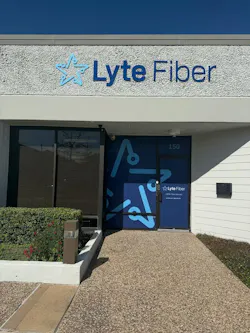

Lyte Fiber has completed its acquisition of MSEC Communications, which has been doing business as MidSouth Fiber, from MidSouth Electric Cooperative (MidSouth) to expand its network across the underserved Southeastern Texas broadband market.
Through this acquisition, Lyte Fiber will incorporate MidSouth Fiber’s established residential and business fiber network across Brazos, Grimes, Madison, Montgomery, Walker, and Waller counties into its Texas footprint.
With the deal complete, the combined company is on track to pass more than 100,000 homes and businesses and serve approximately 25,000 subscribers by the end of 2026.
Lyte offers residential and business internet plans for a range of usage needs. Plans run on an XGS-PON network that delivers symmetrical speeds up to 10 Gbps, along with modern Wi-Fi equipment. Lyte’s customer service team and network operations center are both based in Houston.

Carter Old, Lyte Fiber’s CEO and founder, said that, besides being where he founded his first company, Tachus Fiber Internet, the area Mid-South serves aligns well with Lyte Fiber’s footprint.
“Mid-South Fiber’s network is very complementary to our current footprint because our headquarters is based here in Houston, Texas. “The Mid-South fiber footprint is just a little bit north, which you could technically call the Greater Houston MSA, but it's in a cluster of about six different counties that are north and west of Houston.”
Coop-built network
Founded in 1940 by local farmers to bring industry to the area, provide electricity for families, and access rural areas that large electric companies would not build, MidSouth Fiber illustrates the growing presence of electric cooperatives bringing broadband to rural areas.
MidSouth Fiber was established in 2019 as the fiber internet subsidiary of MidSouth Electric Cooperative.
Like other electric cooperatives that have built fiber networks, MidSouth Fiber originally developed its fiber network to strengthen the cooperative’s electric infrastructure, improve system reliability, and reduce outage restoration times during major weather events.
Electric cooperatives raise the fiber broadband bar
More than 250 electric co-ops are active in broadband. In joint NRECA and National Rural Telecommunications Cooperative (NRTC) reporting, co-op fiber networks operating for over five years reached take rates of nearly 50% to 52%—above the 45% fiber industry average—with strong member satisfaction and positive returns on investment.
As its description says, the fiber investment also created an opportunity to bring high-speed fiber internet service to homes and businesses throughout the six counties MidSouth serves.
Old said the MidSouth Fiber network is well built, making it a good target for expanding its fiber presence.
“It's an extremely well-built network initially built to serve the co-op members,” he said. “When a co-op builds a fiber network for their members, you know it's going to be a first-rate network for their members. They've done a great job of penetrating that and getting a tremendous amount of uptake from a subscriber standpoint.”
Another key attribute of the MidSouth Fiber network property is its proximity to Lyte Fiber’s headquarters.
“When we first learned about the deal, we realized this is really a once-in-a-while opportunity that is pretty rare,” Old said. “And especially given the fact that it's right next to Houston, right next to our headquarters, it made perfect sense for us.”
Focus on consistency
While MSEC’s customers will be served under a different name, Lyte Fiber remains committed to providing a consistent experience.
“It's the same great service that the customers have expected to receive and have been receiving for the past nearly a decade, and we're just going to continue to do that,” Old said. “We're going to keep investing in the network and really focusing on driving greater value to customers and members.”
There are also market synergies between the two providers.
For Lyte Fiber, the MSEC markets fit into its model of Tier 2 and Tier 3 markets that have traditionally been underserved.
“These markets really fit into the standard Lyte Fiber model in that these are smaller- call it Tier 2, Tier 3- small cities and larger towns that have just been underserved for decades prior to fiber coming in,” Old said. “We know how to serve underserved communities incredibly well through Light Fiber, so this is just an opportunity to really accelerate that growth here within the broader Lyte Fiber platform.”
With MSEC having built as much as it could, the electric cooperative found the best bet was to hand off operations to another provider like Lyte Fiber, which is focused on network and service expansion.
Old said that the MidSouth acquisition “really helps us achieve a lot of things a little bit more rapidly.”
“We are a growth-oriented company at Lyte Fiber,” he said. “What was clear was that Mid-South Electric Co-op had built out everything that it was going to build and did not have plans to do more. And because we're constantly looking at doing more and constantly looking at bringing in new products, so that's really why they chose us.”
Another element was the location of the network. MidSouth’s network was not completely contiguous with Lyte Fiber, so it could not be easily served from its Houston office.
From a service perspective, the focus will be residential homes and some businesses because the areas MSEC serves were more rural.
However, Lyte Fiber sees an opportunity to serve small business customers.
“It's primarily residential single-family homes in these smaller cities and towns that they service,” Old said. “There’s also a great element of small to mid-sized businesses (SMBs) there. In fact, I think there's, you know, there's an opportunity to grow more there from that standpoint.”
Local community partner
Seeing itself as a community partner, Lyte Fiber focuses on supporting the communities it serves.
This includes a dedication to maintaining a local presence, with an established office and technicians who work and live in the community.
“I think we speak the same language, which is really, really an intense focus on being local and being in community with the communities that we serve,” Old said.
Lyte Fiber is also committed to giving back to communities, and the same will apply to the new MidSouth markets it enters.
The company has pledged a 1 percent giveback each year to local charities and causes in communities throughout its service areas, and this commitment will be extended throughout MidSouth Fiber’s footprint.
“One of our other hallmarks that I think is really important is our 1% give back pledge,” Old said. “We put that in motion last year, which was our first full year of operations when we had a small number of customers, and we will continue to do that across our entire network footprint.”
While the markets the electric cooperatives serve may be different, the common element is a focus on the members that they have served electricity for decades.
“Co-ops don't want to be sold to just the highest bidder,” Old said. “What they want is obviously a fair price for what they've built, but they also want someone who is perfectly aligned with their members' interests, which is a service that's going to be resilient, reliable, and that's going to be provided for decades to come.”
For related articles, visit the Broadband Topic Center.
For more information on high-speed transmission systems and suppliers, visit the Lightwave Buyer’s Guide.
To stay abreast of fiber network deployments, subscribe to Lightwave’s Service Providers and Datacom/Data Center newsletters.
About the Author
 Sean Buckley
Sean is the Editor-in-Chief of Lightwave. He establishes and executes Lightwave's editorial strategy across its website, email newsletters, events, and other information products. Before coming to Lightwave in July 2023, he served as editor of Broadband Communities. Earlier, he served as senior editor of FierceTelecom and the editor of the former Telecommunications Magazine. He got his start in the optical industry in 1998 when he became the editor of enterprise and optical networks at Information Gatekeepers. He has a BA in English from the University of Massachusetts, Boston, and lives in Dracut, Mass, with his wife, two sons, and his cat, Dove.