AT&T’s Lumen fiber acquisition drives up converged customer base by nearly 50%
Key Highlights
- AT&T's acquisition of Lumen's fiber assets has led to a 45% increase in converged customer additions in new markets since February.
- CEO John Stankey highlights the ability to penetrate underutilized markets and attach more wireless services through fiber expansion.
- The company is in the early stages of convergence, focusing on improving customer retention and evolving into a product- and feature-led service model.
- AT&T plans to incorporate satellite services into its bundles and aims to provide seamless, always-on connectivity across networks.
- Personalized offerings like Build-A-Plan and OneConnect enhance customer flexibility and simplify service management, adding value beyond just pricing.
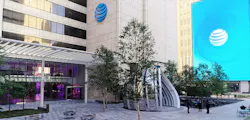
AT&T continues to find that its acquisition of Lumen’s fiber broadband assets is helping bolster its converged broadband and wireless customer base.
This trend was evident in its second quarter, when it reported that Converged gross customer additions rose 45% in the new Lumen territories compared to February, when it completed the deal.
Speaking to investors at the 2026 Goldman Sachs Communacopia + Technology Conference, John Stankey, president and CEO of AT&T, said the upside of the Lumen acquisition is that it is now benefiting from being able to penetrate markets where it had been underpenetrated in its wireless share.

“Not only can we sell fiber and can we sell broadband, and we're demonstrating that we can penetrate that asset better than the previous owner can, but we can attach more wireless to it,” he said. “And we're seeing gross adds on converged customers. In the short time we've owned it, already up nearly 50%.”
AT&T can also leverage new markets it entered via the Lumen deal to drive further scale in broadband, wireless, and fixed wireless.
“When you think about then parlaying that into places where you can get concentration on fixed wireless, where maybe you haven't been as relevant, and you can say, look, I can cluster and get some scale here,” Stankey said. “Those become edge-out opportunities to do more fiber maybe as well, which then gives you a bigger and bigger footprint that ultimately allows you to drive scale. And that's built on the back of a better-performing wireless network as well as having the opportunity to push fixed wireless to do some of that seating.”
Convergence’s early innings
While AT&T is bullish about convergence, the service provider is realistic that it is still an evolving concept.
“We're in the early innings of convergence, and kind of what my expectation will be over the coming years and how we're going to see things play out,” Stankey said. “The near-term benefits are you can put an account together on both products and services, and you see churn improvement, you see lifetime value accretion that goes on with that customer, you see brand loyalty improve.”
Looking forward, AT&T sees the convergence opportunity to evolve into a more product- and feature-led concept.
While he did not provide a specific timeline, Stankey noted that he expects to add satellite services as part of a service bundle. However, it isn’t easy to manage the layers of a network between satellite, wireless, fixed broadband, and Wi-Fi.
“To do that right, I think that's where you start to do things to say, look, I can give you a very seamless experience from a service perspective as well as an easy experience from an account relationship billing perspective,” he said. “And when you start to do those things, and you're giving somebody always-on connectivity, always working, very consistent, that moves beyond it's just as people refer to at a discount.”
Personalized, flexible offerings
As it moves forward with its converged vision, AT&T is offering personalized service sets.
AT&T’s Build-A-Plan lets customers adjust their wireless plan month to month based on their budget and needs.
Alongside personalizing their wireless service, customers can add broadband. AT&T’s updated Build-A-Plan platform allows customers to do that and gain a discount for AT&T Fiber, or AT&T Internet Air starting at $70 a month.
Likewise, AT&T OneConnect offers a single subscription bundle that provides both mobile and broadband services at a clear, all-inclusive monthly price.
“When we look at things like OneConnect, which is to take away the anxiety from a customer to say you got that iPad that's sitting in a drawer that maybe you haven't had on the network, you want your vehicle to have the ability to stream entertainment in the back, all that's available to you on OneConnect in a very straightforward, simple approach, those are the things that start to add value in,” Stankey said. “I think you'll see more and more of that in the, let's call it, the middle innings and the later innings of convergence as we move forward. They are going to move well beyond just an affordable price of putting the products and services together.”
The telco’s timing of these services comes as its cable competitors—Charter and Comcast—continue to expand their wireless base, a trend that continued into the second quarter. Charter added 406,000 lines, while Comcast added 448,000 domestic wireless net line additions.
For related articles, visit the Business Topic Center.
For more information on high-speed transmission systems and suppliers, visit the Lightwave Buyer’s Guide.
To stay abreast of fiber network deployments, subscribe to Lightwave’s Service Providers and Datacom/Data Center newsletters.
About the Author
 Sean Buckley
Sean Buckley
Sean is the Editor-in-Chief of Lightwave. He establishes and executes Lightwave's editorial strategy across its website, email newsletters, events, and other information products. Before coming to Lightwave in July 2023, he served as editor of Broadband Communities. Earlier, he served as senior editor of FierceTelecom and the editor of the former Telecommunications Magazine. He got his start in the optical industry in 1998 when he became the editor of enterprise and optical networks at Information Gatekeepers. He has a BA in English from the University of Massachusetts, Boston, and lives in Dracut, Mass, with his wife, two sons, and his cat, Dove.