Verizon advances AI presence with $4B in AI Connect contracts

Verizon is riding a new wave in its AI Connect business, signing nearly $4 billion in contracts and capping off six months of growing interest in its fiber-centric platform for hyperscalers.
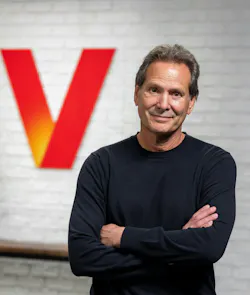
Dan Schulman, Verizon’s CEO, told investors during its third-quarter earnings call that the service provider sees new opportunities emerging.
“We are going to develop all sorts of new value props using our data, our network infrastructure, our extensive customer relationships, and our trusted brand,” he said. “And so, you're going to see a very different Verizon going forward with all sorts of new adjacencies opening up for us.”
Verizon’s AI Connect momentum is seen in its latest deal with Amazon Web Services (AWS), which will build new, long-haul, high-capacity fiber pathways to connect AWS data center locations, enabling AWS to continue delivering and scaling its cloud services for customers building and deploying advanced AI applications at scale.
Schulman noted that “AI infrastructure is becoming a real growth driver for Verizon,” and the latest agreements with AWS and Google are proof points of its strategy.
“We announced that we have signed a dark fiber agreement with Amazon Web Services valued at over $2 billion, building on the Google agreement we announced last quarter,” he said. “These two contracts are a clear signal that the largest builders of AI infrastructure in the world are choosing Verizon as a strategic connectivity partner.”
Synergy Research says AI is driving accelerated growth forecasts
Driven by AI, key cloud and digital services revenues are set for strong growth over the next five years. Synergy Research noted in its revised forecast of worldwide revenues from cloud computing services, cloud software services, and leading consumer-oriented digital services that they will grow more than threefold from 2025 to 2031, with the total market exceeding $5 trillion in 2031.
Active hyperscaler pipeline
Verizon’s agreements with Google and Microsoft are just two of the larger pool of customers it works with to provide its AI Connect service.
The service provider is seeing strong customer demand across dark fiber, lit fiber and edge compute locations.
While he did not specify any other customers, Schulman said it has “an active pipeline of additional hyperscalers, neo cloud providers and large enterprise clients who are in negotiations to have us supply them with either dark or lit fiber connectivity.”
He added that “we are seeing momentum with numerous partners to use our network hubs for AI inference edge computing, which is already turning into signed deals.”
This demand is a good sign that fiber and edge computing will contribute to future growth. Verizon expects revenue growth from its AI Connect service customer wins to become impactful next year.
What’s compelling about Verizon’s recent AI Connect contracts is that they leverage its existing fiber and real estate assets.
“The incremental capital required to deliver against these agreements is modest and success-based and tied to defined contracts,” Schulman said. “And we've locked in the fiber to deliver.”
Looking ahead, Verizon said there’s no change to its 2026 CapEx outlook. Verizon’s capital expenditure was $11.9 billion through the end of the third quarter.
“We are on track to meet our full-year guide of $16 billion to $16.5 billion inclusive of success-based capital related to AI Connect,” Schulman said.
Keep up to date with Lightwave’s earnings coverage.
You can check our publication’s key segments:
And
Here’s other news on Verizon:
· Verizon takes on $1B dark fiber data center deal with Google|
· Verizon’s Frontier acquisition bolsters its fiber/wireless converged plans
· Verizon’s CEO will consider inorganic deals and partnerships to reach 40 to 50M fiber passings
· Verizon’s CEO says convergence is our most significant near-term growth opportunity
Scaling fiber reach
Verizon's growing fiber network underpins AI Connect.
In September, Verizon reached a multi-billion-dollar supply agreement with Corning for over 80 million miles of high-density optical fiber to meet surging demand, reflecting how fiber is being used to serve multiple network needs at once.
The agreement through 2032 provides the high-capacity optical solutions needed to expand nationwide consumer broadband access while scaling a high-density backbone to support Gen AI compute needs.
As part of this agreement, Verizon will leverage Corning’s Flow Cable, which enables Verizon to deploy significantly more optical fiber within conduit pathways. The flexible ribbon cable maximizes the value of Verizon’s existing infrastructure investments while substantially increasing network capacity and bandwidth.
“Last month, we announced a multi-year, multi-billion-dollar agreement with Corning for more than 80 million miles of fiber through 2032, supporting both our fiber broadband expansion and the long-haul backbone that AI hyperscalers need,” Schulman said. “Taken together, this opportunity significantly extends our addressable market, our revenues and our profits, and we will talk about how it helps to drive our 2027 growth on our next earnings call.”
Verizon Business reported total operating revenues of $7.02, up 2.6% sequentially.
For the second quarter, Verizon’s total operating revenue was $34.3 billion, up 1.5% year over year. Mobility and broadband service revenue grew 2.9%, offset by a 9.0% year-over-year decline in equipment revenue.
For related articles, visit the Business Topic Center.
For more information on high-speed transmission systems and suppliers, visit the Lightwave Buyer’s Guide.
To stay abreast of fiber network deployments, subscribe to Lightwave’s Service Providers and Datacom/Data Center newsletters.
About the Author
 Sean Buckley
Sean is the Editor-in-Chief of Lightwave. He establishes and executes Lightwave's editorial strategy across its website, email newsletters, events, and other information products. Before coming to Lightwave in July 2023, he served as editor of Broadband Communities. Earlier, he served as senior editor of FierceTelecom and the editor of the former Telecommunications Magazine. He got his start in the optical industry in 1998 when he became the editor of enterprise and optical networks at Information Gatekeepers. He has a BA in English from the University of Massachusetts, Boston, and lives in Dracut, Mass, with his wife, two sons, and his cat, Dove.
Related

 newsfibercable1920x1080adobestock1951861790