Relativity Networks secures $22M in funding in tandem with a $40M hyperscaler deal


Relativity Networks, an early hollow core fiber (HCF) pioneer, raised a $22 million SAFE investment (a simple agreement for future equity).
Led by new investors including Rhapsody Venture Partners, Bell Ventures, and Faster Than Glass, the round more than doubled Relativity’s target.
"As AI continues to reshape the digital economy, new approaches to infrastructure will be needed to support growing performance, scale and connectivity requirements," said Martin Cossette, Head of Bell Ventures.

Hyperscaler validation
Relativity’s HCF approach is not just attracting attention from the investment community.
The company has also secured a $40 million follow-on order from an unnamed leading hyperscaler after the customer successfully tested Relativity Networks' ChronoCore™ advanced optical networking technology linking two data centers.
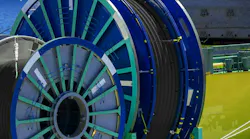
In a joint project with Prysmian, Relativity Networks produced its highest-density hollow-core fiber cable to date: 24 fibers in a single 10-millimeter cable. Relativity Networks built this on its ChronoCore technology.
Previously, Relativity and Prysmian established a partnership in March 2025. As part of this partnership, Prysmian and Relativity Networks co-manufacture fiber and cable based on Relativity Networks' HCF technology, which was developed in collaboration with the College of Optics and Photonics at the University of Central Florida.
In testing with Dura-Line, the cable was installed reliably in standard microducts, confirming the high-density cable's readiness for real-world deployment.
ChronoCore™ hollow core fiber is produced at Prysmian's facility in Eindhoven, the Netherlands, and cabled at Prysmian's plant in Claremont, North Carolina. Orlando, Florida, performs couplers, fiber characterization, and installation training.
Carsten Boers, Managing Partner at Rhapsody Venture Partners, noted that Relativity Networks’ HCF approach opens new opportunities because its technology can overcome distance limitations in building AI infrastructure.
“Power availability is the key constraint on data center placement,” he said. “ChronoCore carries light roughly 47% faster than solid-core glass fibers, so distributed sites can sit that much farther apart within the same latency budget - more than doubling the area an operator can build in. It's deployed today, validated with partners like Prysmian, and the order book is well ahead of our expectations.”
AI structural shift
Data center providers are targeting new builds in areas that have available power, meaning geography is becoming a first-order constraint on AI scaling.
Relativity’s HCF approach responds to how and where AI infrastructure is being built.
This shift is what Relativity calls the AI Geography Era.

"AI is no longer scaling inside a data center. It is scaling across geography," said Jason Eichenholz, founder and CEO of Relativity Networks. "The next great AI infrastructure challenge is making thousands of distributed GPUs behave like one machine, even when the power they depend on is miles apart. ChronoCore™ is purpose-built for that world, giving hyperscalers the low-latency connectivity needed to scale AI wherever power is available."
In a new white paper, The AI Geography Era, Relativity discusses the Propagation Tax, the unavoidable latency cost of distance. It also looks at why geography has become a first-order design constraint for the next generation of AI infrastructure.
In their search for new power sources, AI systems can’t be run from one campus. Hyperscaler data center providers are building facilities across multiple geographically separated sites that must operate as one synchronized AI factory, with every GPU working as though it were in the same room.
Relativity noted in its white paper that since distance is governed by physics, latency can’t be solved with traditional approaches.
“During AI training, hundreds of thousands of GPUs must repeatedly exchange information and synchronize before computation can continue,” wrote Relativity. “Every additional kilometer between campuses increases the time required for those exchanges, leaving valuable compute resources waiting instead of working. That delay cannot be eliminated by faster switches, improved software, or better algorithms. It is determined by the finite speed at which light propagates through optical fiber. This unavoidable performance penalty is the Propagation Tax.”
Moreover, the AI industry’s progression from Scale Up and Scale Out to Scale Across, where geographically distributed AI campuses operate as a single synchronized system. Power availability, not networking advances, is driving the transition to Scale Across.
“As geography becomes a first-order design variable, propagation delay becomes a fundamental constraint on AI system performance,” wrote Relativity. “The industry’s response has largely focused on compensating for that delay through increasingly sophisticated networking technologies. This paper argues that the next step is to reduce the delay itself, enabling Scale Across to realize its full potential.”
For related articles, visit the Data Center Topic Center.
For more information on high-speed transmission systems and suppliers, visit the Lightwave Buyer’s Guide.
To stay abreast of fiber network deployments, subscribe to Lightwave’s Service Providers and Datacom/Data Center newsletters.
FOR FURTHER READING



 relandprysmian
About the Author
 Sean Buckley
Sean Buckley
Sean is the Editor-in-Chief of Lightwave. He establishes and executes Lightwave's editorial strategy across its website, email newsletters, events, and other information products. Before coming to Lightwave in July 2023, he served as editor of Broadband Communities. Earlier, he served as senior editor of FierceTelecom and the editor of the former Telecommunications Magazine. He got his start in the optical industry in 1998 when he became the editor of enterprise and optical networks at Information Gatekeepers. He has a BA in English from the University of Massachusetts, Boston, and lives in Dracut, Mass, with his wife, two sons, and his cat, Dove.