Relativity Networks and Prysmian hollow core fiber (HCF) manufacturing partnership targets data center opportunities
What is hollow core fiber?
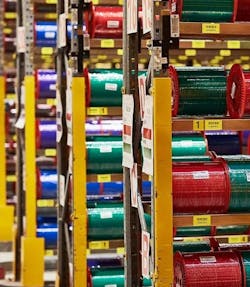
Hollow-core fiber (HCF) is an optical fiber that guides light through a hollow central core, unlike traditional fibers that use solid glass or plastic core. This design enables various advantages, including low latency, high power transmission, and broader bandwidth, making it promising for multiple applications like data center interconnection.
Prysmian is advancing its status in the burgeoning hollow core fiber (HCF) market via a partnership with Relativity Networks volume production in demand by operators of the data centers required to meet the growing needs of AI.
One key issue that HCF is determined to solve is the emerging electric power bottleneck in building new data centers.
Relativity Networks HCF technology and Prysmian's fiber cables are addressing that problem by enabling cloud-computing hyperscalers to locate data centers closer to power sources, whether conventional electric utilities or green-energy providers.
The company's HCF solutions can address two main applications for data centers: data center interconnection and intra-data centers.

"This deal is a big breakthrough for the industry demanding HCF cables," said Relativity Networks founder and CEO Jason Eichenholz. "It will enable us to meet a seemingly insatiable demand by hyperscalers for hollow-core fiber technology. With Prysmian, a recognized leader in communications and energy cable systems, we will better address the telecommunications and data center markets and provide the builders of AI-driven data centers the capabilities they've been clamoring for.”
Focus on scale
As part of this partnership, Prysmian and Relativity Networks co-manufacture fiber and cable based on Relativity Networks' HCF technology, which was developed in collaboration with the College of Optics and Photonics at the University of Central Florida.
Prysmian will manufacture Relativity Networks' HCF fiber at a dedicated facility in its production center in Eindhoven, the Netherlands.
By engaging Prysmian's global manufacturing expertise, the companies will collaborate to transition the industry to hollow-core fiber technology. Relativity Networks will also provide connectors and hardware that ensure compatibility with existing fiber interfaces.
While it has not announced any specific customer, Relativity has already gained significant traction among hyperscalers who want to hollow-core fiber at scale; this strategic agreement with Prysmian will ensure the large-scale manufacturing necessary to meet the rising demand for advanced optical fiber and cable solutions for data centers across the U.S. and globally.
HCF’s benefits
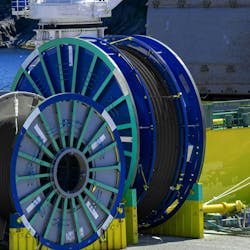
HCF has various benefits for hyperscaler data center providers.
Hollow-core fiber transmits data nearly 50% faster than conventional fiber-optic cables, which the data industry has long used. It enables data to travel 1.5 times farther without impacting the latency that can throw intricate multi-location data operations and applications out of sync.
While traditional fiber cables typically limit data centers to within 60 kilometers (37 miles) of power providers — or to one another — due to latency constraints, hollow-core fiber technology extends this range to 90 kilometers (56 miles).
For related articles, visit the Business Topic Center.
For more information on high-speed transmission systems and suppliers, visit the Lightwave Buyer’s Guide.
To stay abreast of fiber network deployments, subscribe to Lightwave’s Service Providers and Datacom/Data Center newsletters.
About the Author
 Sean Buckley
Sean Buckley
Sean is the Editor-in-Chief of Lightwave. He establishes and executes Lightwave's editorial strategy across its website, email newsletters, events, and other information products. Before coming to Lightwave in July 2023, he served as editor of Broadband Communities. Earlier, he served as senior editor of FierceTelecom and the editor of the former Telecommunications Magazine. He got his start in the optical industry in 1998 when he became the editor of enterprise and optical networks at Information Gatekeepers. He has a BA in English from the University of Massachusetts, Boston, and lives in Dracut, Mass, with his wife, two sons, and his cat, Dove.